

Cheers from the rooftop.
Obfuscated beneath the surface of Santa Fe lies a furtive secret society-a shadowy cabal that stands sentinel over a hidden trail of esoteric treasures. No wait, nevermind. It is just the Margarita Trail-a fantastic, alcoholic, and flavorful tour of some of the finest Margaritas in the world. This self-guided, salt-rimmed tour takes thirsty participants to 31 participating bars and restaurants where they can try special concoctions and collect stamps to unlock special rewards.
How it Works
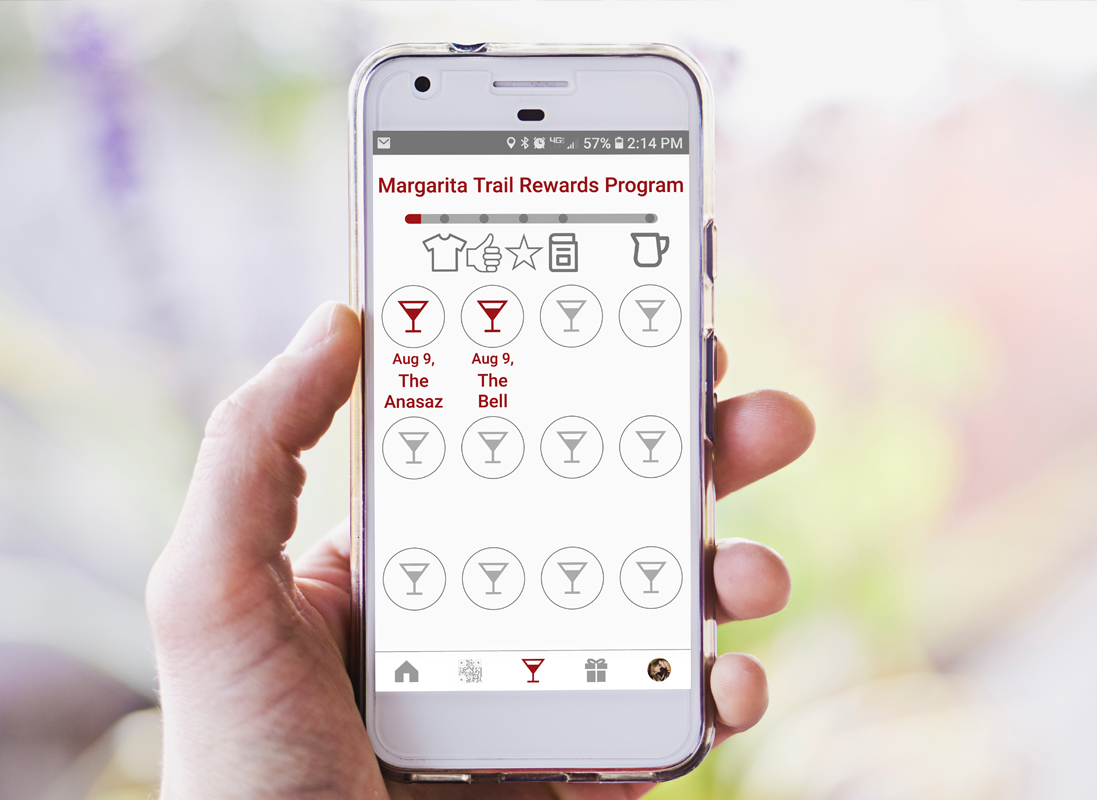
This is your passport.
Starting the tour is as simple as purchasing a Trail Passport, which can be done via TOURISM Santa Fe Visitors Centers, directly from any participating establishment, or by downloading the paid Margarita Trail Passport app from either the Apple or Google app stores. Once you have your passport and included map, you are free to head out and sample any of the special Margaritas scattered across town.
At each stop, you can collect a physical or digital stamp that will qualify you for membership in the Margarita Society (which conveys additional benefits), signed copies of The Great Margarita Book, and a Margarita bartender kit. You can only collect two stampers per day (drink responsibly!), but you are invited to come back to the tour as often as you like to sample the next signature Margarita on your quest for cocktail conquest.
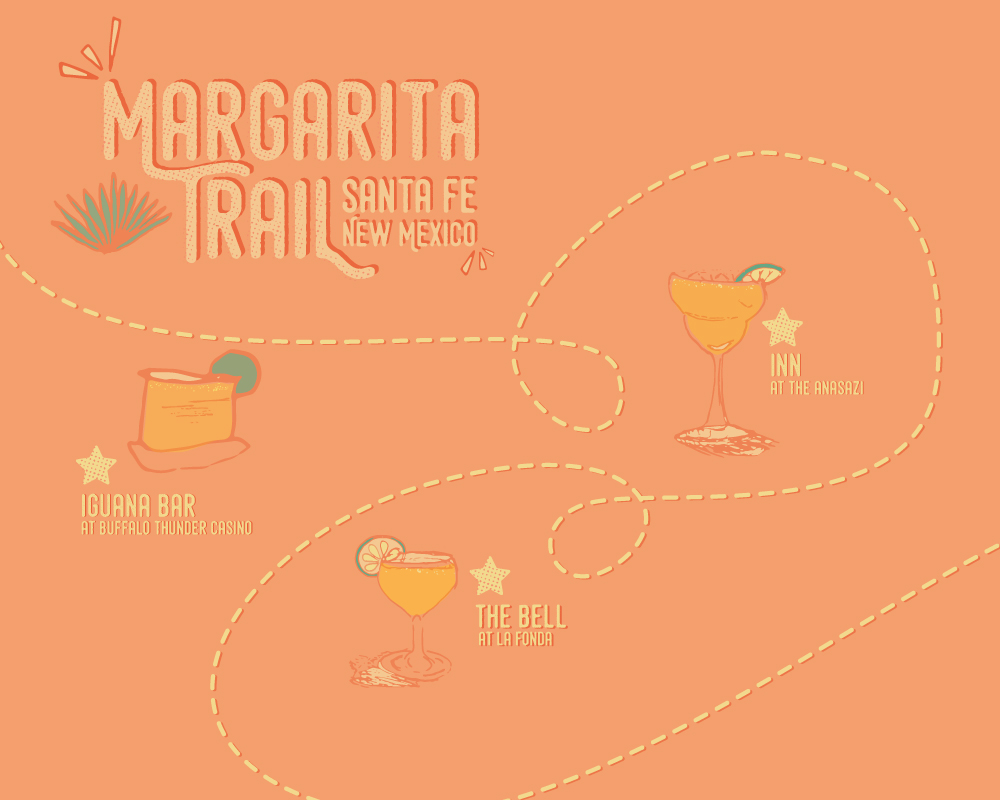
A guide to our first stops.
To help get you started, we stepped out on our own Margarita Trail experience. Keep reading to hear about our first three stops, an expedition headed by our own Christine Robertson-general manager of Fort Marcy Hotel Suite-and retold in her own words.
The First Three
August 8, 2018 – Iguana Bar at Buffalo Thunder Casino: A Rocky Start
August 9, 2018 – Inn at the Anasazi: George is King
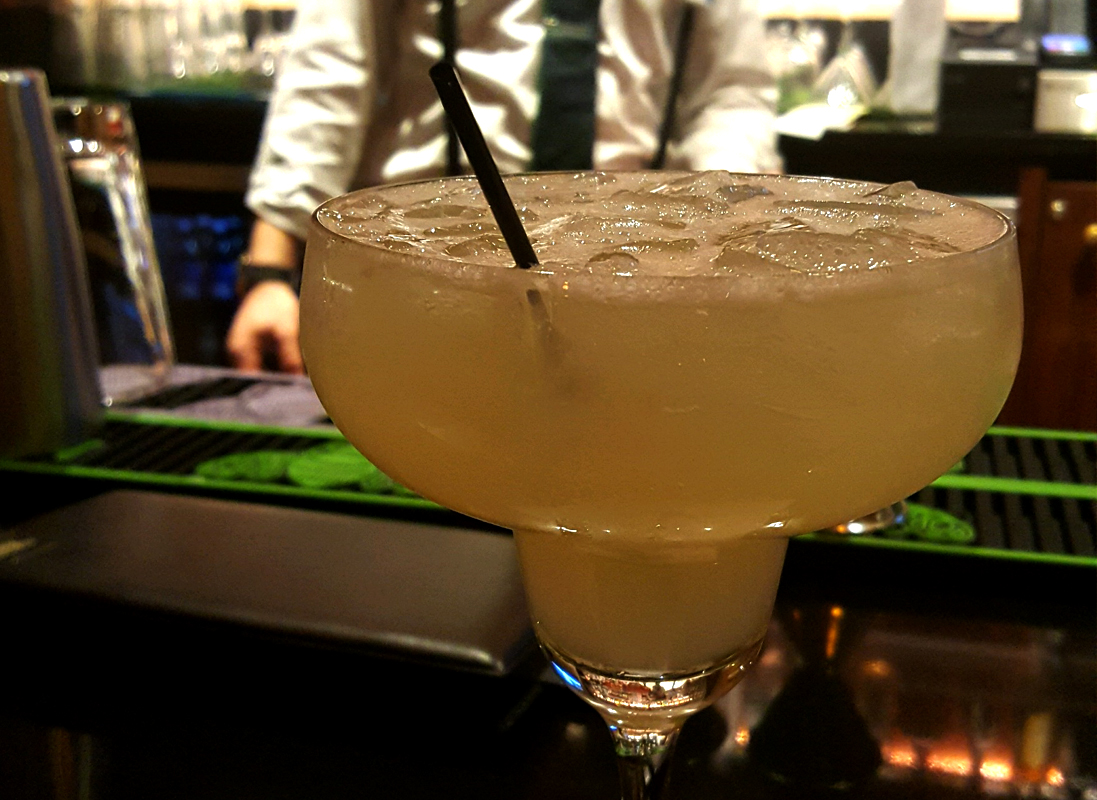
It’s a big one, that’s for sure.
My folks love to gamble and I discovered that one of their favorite casino bars was on the trail, so we did it on the fly. However… they gave us the wrong margarita. The app isn’t totally user friendly-lacking some basic instructions-and unfortunately our first bar did not know either. The guy that served us wasn’t the regular bartender, so we found out when we were already drinking that the ones he made us weren’t the right Margarita. Also, all the bars have cards that participants are supposed to scan, but we didn’t know that, and he didn’t know that, so we didn’t get “credit”. The Marg was good and very full, but it wasn’t the best experience on the trail.

A wide selection. What’s your poison?
This is a stunning hotel and restaurant, and the highlight of our trail so far. George-our bartender/server-was extremely helpful and a skilled mixologist. We grabbed a beautiful, high table in the lounge and enjoyed the official trail margarita: the “Sandia y Pepino” (silver tequila, Cointreau, watermelon, cucumber, and tajin lime salt). You can only have one during your stop, so we stayed and enjoyed a few of George’s other creations-including the Spicy Paloma and a Cucumber Mojito. Both were fantastic.

Designed by Guillermo Del Toro.
We decided we would go back just to visit George. He gave us the lowdown on how everything worked and answered our questions about the Trail. We wished we had started here. As I mentioned, this is a stunning room, and one of the highlights of that area was the tequila designed by Guillermo de Toro, which was the focal point of the tequila wall. They have a bar menu, so we ordered some chips & salsas while we were there. They were good as well.
August 9, 2018 – The Bell at La Fonda: Rooftop Drink Spot

Designed by Guillermo Del Toro.
This spot had super views of the city and a nice breeze. Our server here was austere in expression and could have made an excellent addition to the Queen’s Guard. We made a bet that whoever could make him smile didn’t have to pay the bill. Nevertheless, their margarita, the “Don Real Margarita” was very good (sauza hornitos reposada, anejo, gran marnier, and patron citronge). We also split a few quesadillas-veggie and chicken-and they were both good. The experience was great, and we would definitely come back for another round of drinks and quesadillas, but the Trail beckoned, and we moved on.
Wrap-Up
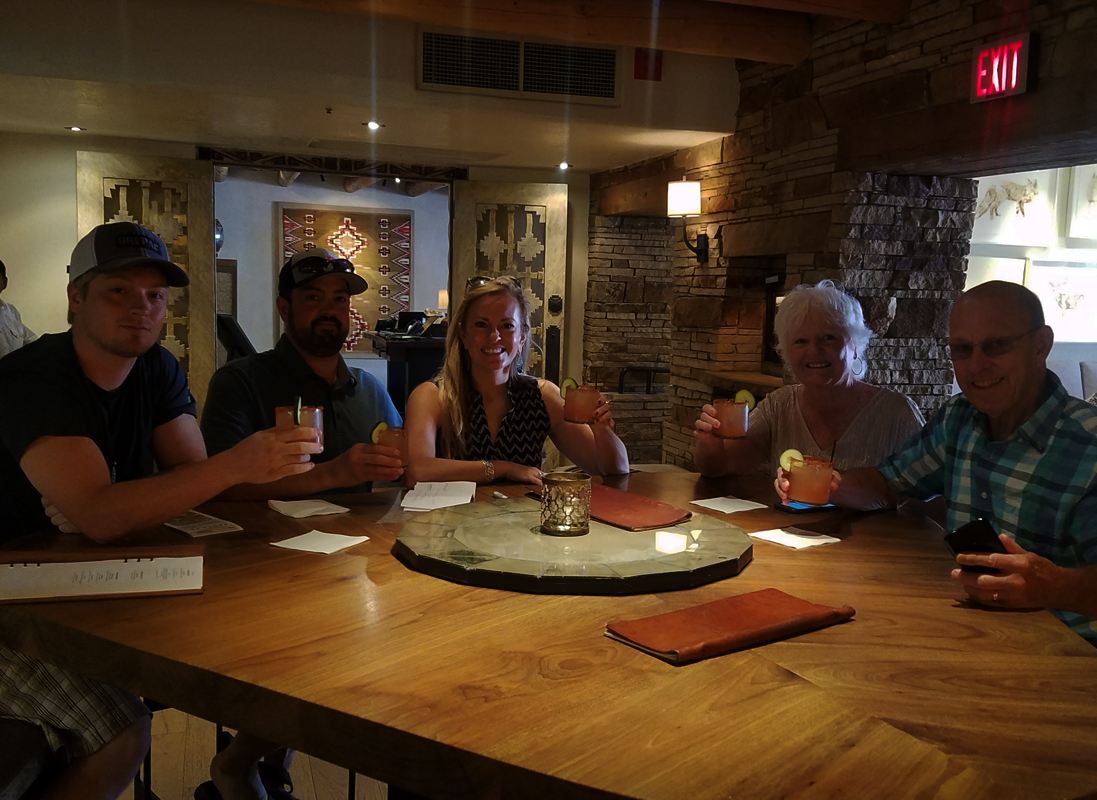
We’ll definitely be back.
While things got off to a rocky start, our intrepid pathfinders managed to overcome some initial confusion with the app and the process of completing the trail on their way to claiming their first two stamps, 40% of the way to their first prize.
To find more information about the trail, visit the TOURISM Santa Fe page here, or go straight to the Apple App Store or the Google Play Store to grab the passport app. Make sure to share your favorite Margarita Trail pick, and stop by Fort Marcy Hotel Suites to recover from your evenings on the Trail.
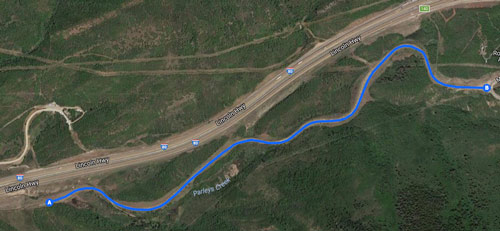
West of Park City, just on the outskirts of Summit Park, a lonely stretch of forgotten road snakes across the gentle slope off the shoulder of I-80. After branching off the westernmost road in town, the irregular and deteriorating pavement slithers along Parley’s Creek, a thin and crumbling line between a seven-lane transcontinental artery and the largely unspoiled wilderness of the mountains beyond.
This forgotten path, simply labeled “Unnamed Road” on most modern GPS services, terminates in a gravel patch along the highway, giving the impression of a slow-burning stone fuse, quietly guttering in the mountain breeze. No clue is immediately visible as to its original purpose, long since erased by both progress and the elements. Some few travelers occasionally make use of the road’s weatherworn carcass to reach some of the more far-flung trails in the area, but fewer still remember its story.
With the help of amateur sleuthing, local experts at the Park City Museum, and a ream of historical cartographical data, we were able to look into the past and salvage a story from the larger saga of the evolution of transportation through Parley’s Canyon.
A MODERN MYSTERY
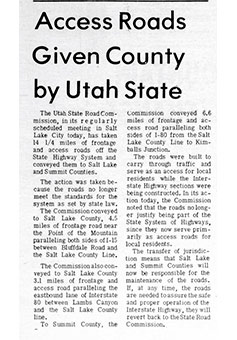
What is now moldering asphalt was once a frontage road to the newly-constructed and mighty I-80. It allowed local traffic to embark and disembark from the interstate, relieving traffic on the main freeway and disseminating it onto the wider Summit County road network. This particular spur mostly carried motorists headed to or from Summit Park and Kimball Junction.
The current frayed end of the line once connected as an exit directly from the freeway. In 1974, however, the road was disconnected and given to Summit County by the Utah State Road Commission, along with several similar easements in other areas surrounding the interstate highway. This marked the beginning of the end for our stretch of mystery road, which slowly fell into the forgotten disrepair seen today.
JUST A DETOUR
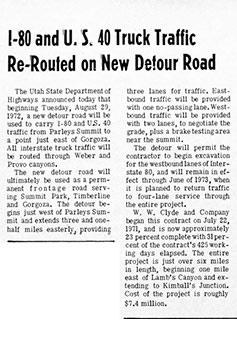
Before the frontage road came a detour. The construction of the interstate was a long, arduous affair. The route through Parley’s Canyon occupied road crews from 1971 to 1973, and required alternatives for area residents who couldn’t be disconnected from the rest of the state for two years.
While most highway traffic split north toward Ogden or followed south to Provo, the residents of communities from Lamb’s Canyon to Park City needed local roads. “Unnamed Road” took up the slack, allowing the people of Summit Park to travel to and from the rest of the state.
SOMETHING BORROWED
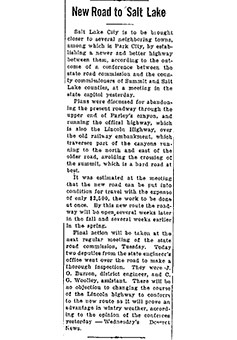
That would be an interesting tale in and of itself, but the story goes even deeper. As it turns out, this detour was not purpose-built for the interstate project. It was, instead, borrowed from the existing highway in the region, US-40, which made up part of the auxiliary route of the Lincoln Highway.
The Lincoln Highway, named by its creator for President Lincoln, was also the first major transcontinental highway in the United States, stretching all the way from New York to San Francisco. The highway deserves its own thorough treatment, an ambitious undertaking befitting the such an influential feat of engineering, which will not be attempted in this article. Learn more about The Lincoln Highway on the U.S. Department of Transportation Federal Highway Administration website.
The very first route for the Lincoln Highway detoured all the way north to Ogden, opting for a less difficult path than the steep, winding grades through Parley’s Canyon. It wasn’t until the “Unnamed Road” through the canyon was made more manageable in the transformation to US-40 that it was made an official auxiliary route of the Lincoln Highway. Previous to the taming of “Unnamed Road” as part of the highway-ification process, it was not uncommon for cars to spin out or go over the side near the Mountain Dell Reservoir, which made Parley’s Canyon unfit for inclusion in the first iteration of the Lincoln Highway.
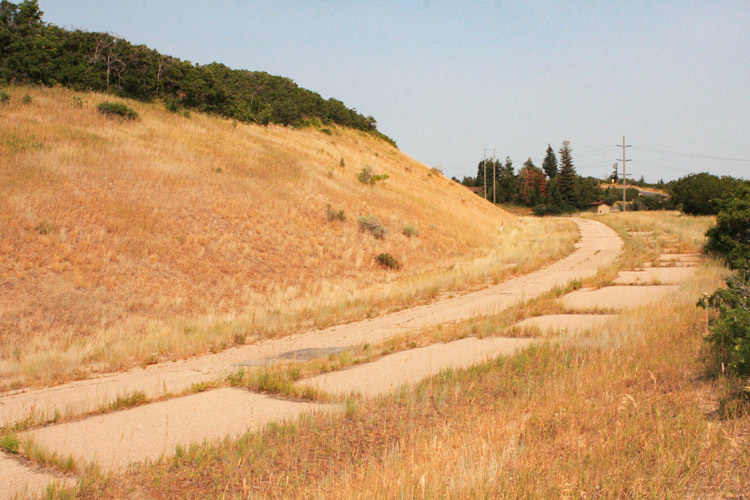
“Unnamed Road” Today
With the inclusion of US-40 in the Lincoln Highway, our original chunk of mystery road saw its first widespread use. The very tail end of the modern remnant is not included, having not yet been built, but the rest of our road of interest is, as can be seen on the official map of the Lincoln Highway. Rather than a side road or a detour, the now-crumbling path was directly on the main line. Cars, trucks, and other vehicles merrily wound their way down this now-forgotten path.
It was at this point that the road was at its most important and most notable. Part of the country’s first coast-to-coast highway, an integral stretch of US-40, and a central route through the state of Utah, what is now a dilapidated memory once carried thousands of cars headed to every conceivable destination. But those days are done.
DUST IN THE WIND
Little by little, project by project, this road fell from use. From a main highway to a detour, from a detour to a frontage road, from a frontage road to a local street, from a local street to a decommissioned patch of asphalt, it has dwindled away. How long will it be until even this broken detritus is ground to gravel and dust, existing only in bygone maps and fading memories? How many more forgotten byways are quietly fading into obscurity, unused and unmarked? It is hard to say. But this old thoroughfare does serve as a vivid reminder that everyone and everything holds a unique story, and that things are not always what they appear.
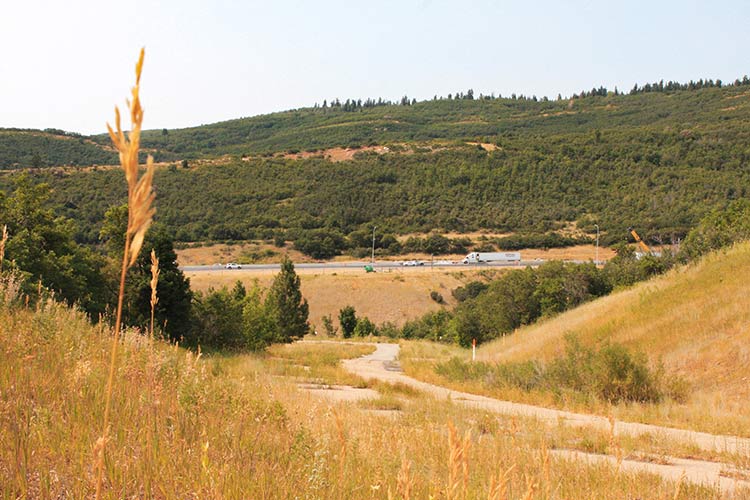
View of I-80 From “Unnamed Road”

Related Articles
Things to Do During Park City’s Mud Season
Our Picks for Mountain Bike Rentals Park City
Deer Valley Ski Resort, Park City, Utah: An Overview
Park City Spring Break
Craving an alpine escape? Perhaps, a place for the whole family (yes, even the furry ones) to hike, swim, and explore the Wasatch wilderness while making it back on Main Street for sunset and dinner? Luckily, this local favorite checks all these boxes and more! Clear your weekend plans, pack a swimsuit and head into the Mountains for Bloods Lake.
The Pros
High-Altitude Oasis
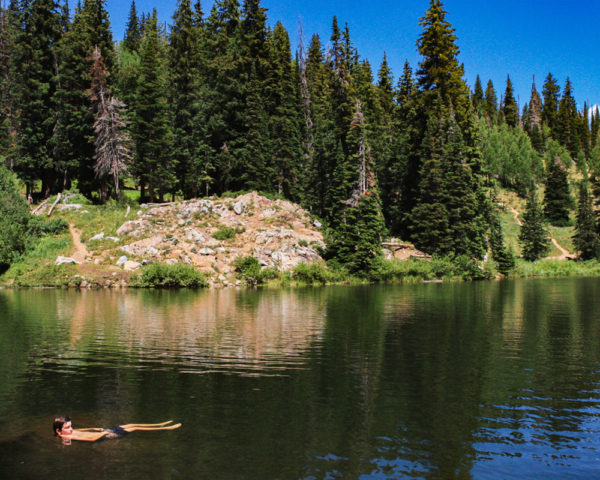
Nothing like its namesake, Bloods Lake is a pristine cerulean hue with peninsulas, rock features, and even a rope swing! Although the water is chilly, it is the perfect refresher in the heat of Utah’s summer months. Along its banks, there are flat openings for sunning or perfectly spaced trees for stringing up a hammock and relaxing in the shade.
Pro tip: pack a picnic and pick up some inner tubes to step up your lakeside lounging like these locals pictured below (then try to say that 5 times fast…)
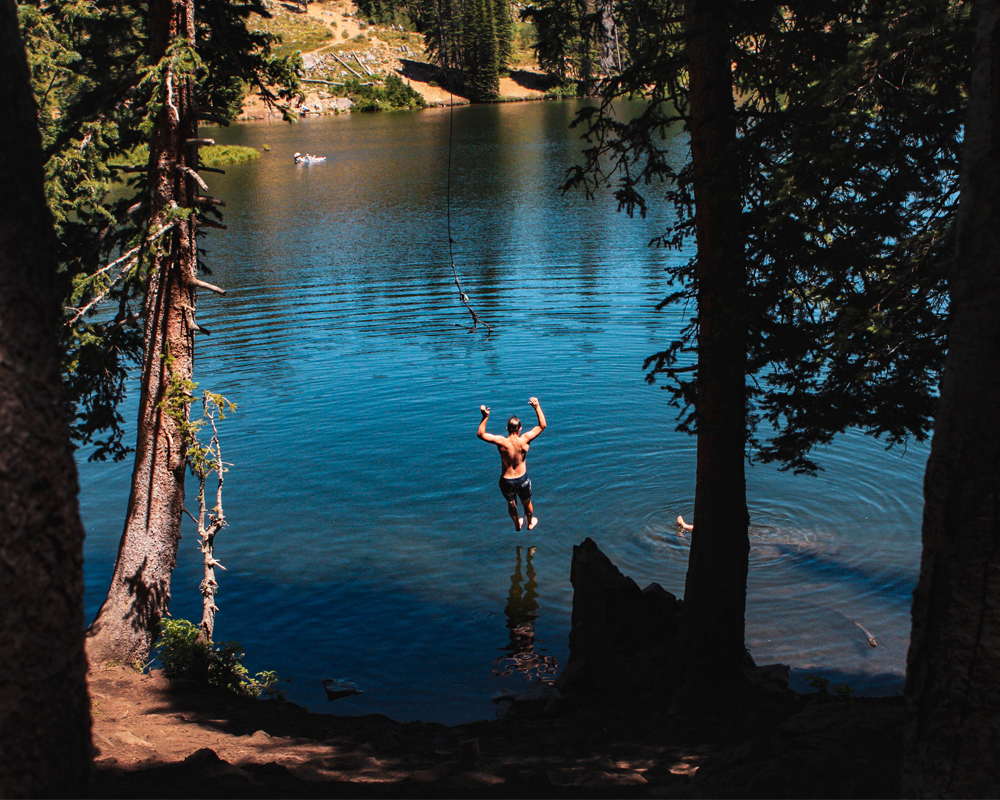
High-Altitude Oasis
The hike to Bloods Lake begins at 9,724 ft and rambles through patches of wildflowers, small boulders, and mature conifers, all the while providing sweeping vistas of the Heber Valley below. The trail is rated by AllTrails as an “moderate”, out and back trail covering a mile of high altitude terrain. After a half-mile or so the trail steepens for a sharper decent to the lake itself. Remember this on your way back up to the trailhead as the initial climb is a total glute-burner.
Pro tip: Find a walking stick to aid in the climb back up.
Scenic Drive
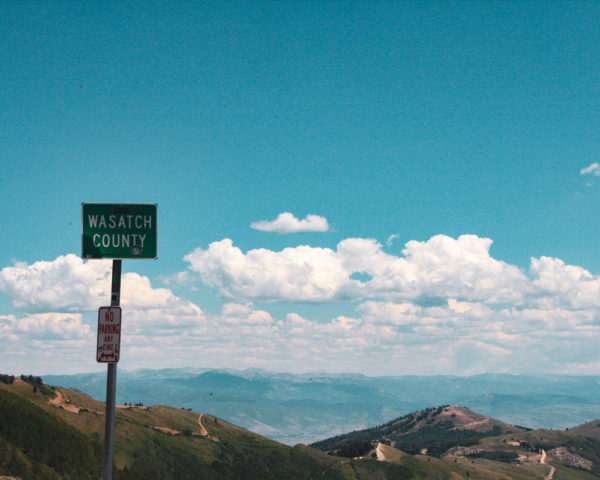
No matter which way you approach Bloods Lake, the drive is going to be gorgeous! Guardsman Pass is one of 58 Scenic Backways designated by the State of Utah and if you are looking for epic mountain views, the drive will not disappoint. It takes 20 minutes from Main Street Park City to the Guardsman Overlook parking lot but expect for it to take longer with all the beautiful backcountry views that demand attention. Remember that Guardsman Pass is only open from May to October and there are gravel and dirt sections. A 4-wheel drive car is not necessary, but with steep drop-offs and an average 7% grade, you may feel more comfortable in one.
Pro tip: Follow the road west towards the Salt Lake Valley as Guardsman Pass Scenic Backway leads into the stunning Big Cottonwood Canyon Scenic Byway, home to Brighton and Solitude Ski areas.
Dog Friendly
Due to Utah’s watershed laws, dogs are not allowed in many canyons throughout the Wasatch Front, including Big Cottonwood, which lies mere meters westward down Guardsman Pass. Luckily for us dog lovers, the trailhead to Bloods Lake descends eastward on the Wasatch Back and therefore is a very popular hike for dog owners in Park City and in Salt Lake! Expect to see them frolicing in the lake, or socializing off leash on its banks.
Pro tip: Always bring extra doggie bags for any clean up-let’s keep our trails clean!
The Cons
Parking/Weekend Traffic
By 10:30 am, expect lines of parked cars adorning the cliff edges of Guardsman Pass Overlook as the small parking lot serves several, multi-use trails and accommodates no more than 15 vehicles. Arrive early to claim your spot or spend time gingerly navigating the skinny one-lane road for an opening on its shoulder. By mid-afternoon the area can be so packed with hikers, bikers, dogs, and sightseers it can take you longer to maneuver into a spot then it will take you to descend the trail to the lake itself. Consider yourself warned, especially if this destination is on your weekend agenda!
Pro tip: If you are in search of solitude, avoid Bloods Lake on weekends.
Wrap-Up
All said and done, an escape to Bloods Lake could take you a few hours or a whole day! Between its beauty, unique features, and sociable atmosphere, it’s no wonder Bloods Lake is a locals favorite. Make sure to visit before the summer ends, as Guardsman Pass closes for the season.
Browse our Park City vacation rentals for your next getaway.
Related Articles
Things to Do During Park City’s Mud Season
Our Picks for Mountain Bike Rentals Park City
Deer Valley Ski Resort, Park City, Utah: An Overview
Park City Spring Break
Think about how you travel. How do you choose which Santa Fe restaurant to try? Where did you book your Park City lodging? Who scheduled your flight to San Diego? How much did you pay for everything?
Odds are pretty good that you use the internet to handle most-if not all-of those tasks. In a matter of minutes, you can find the best-reviewed lodging in town, shop around for the best rate, and pay for it all by tapping on the rectangle you keep in your pocket.
Now pretend all of that went away. Finding lodging requires a travel agent or a guidebook. There is no way for you to find out what the populace at large thinks of any restaurant or lodging. Airline tickets are handwritten paper slips with carbon paper. Reservations are taken from a giant board and written in a physical ledger. This isn’t a nightmare fantasy world. It’s travel before the internet.
1. To be clear, I am referring to a smart phone-just in case that wasn’t apparent.
The Process Today

A typical vacation planning scene in 2018.
Most travel planning in the 21st century starts and ends on the internet. Once a destination and date are selected, the average traveler heads straight to Google, TripAdvisor, Yelp, or other sources of aggregate information to find customer reviews for the “best lodging in (Destination).” After sifting through mountains of stars, thumbs, and upvotes, a shortlist emerges. Based on these preferences, the quest for the best deal begins. Bargain sites, price liquidators, and the property itself are consulted for the lowest conceivable price or best extras. Once a point of sale is selected, a few credit card details and a quick button press or two secure the room, complete with confirmation numbers and receipts.
This whole process can be finished in as little as five minutes of frenzied scheduling or as much as a week of careful deliberation, depending on the tastes of the traveler. Regardless of the time frame, all the power and agency in the process belong to the customer. Booking a trip in 2018 is a personal voyage that belongs to the sojourner and no one else. Seemingly endless information, choice, and validation are literally at the fingertips of anyone seeking a weekend away. But that wasn’t always the case.
Before the Web

How may we direct your call?
Long before the internet became the cornerstone of modern commerce and communication, the process of planning a travel excursion was much more complicated and opaque. It was an onerous task, fraught with perils and replete with physical documents. Only the most intrepid adventure seeker could make all their own arrangements. In those times of decentralized information and paper archives, the travel agent reigned supreme.
Travel agents were the lynchpin of the travel experience. Possessed of an encyclopedic knowledge of destinations, airlines, lodging providers, and tour operators, these middlemen pulled together the disparate and disconnected threads necessary to weave a perfect vacation. Agents survived on the commissions paid by lodging providers and airlines, taking a cut of each booking that passed through their hands. In exchange, they helped travelers locate and secure all the services necessary to carry off a successful trip.
Remember, robust travel information was not readily available to the average Joe. Finding a place to stay required direct local knowledge, studying a guide book, taking a brochure, or some other kind of investigative legwork. Reviews or ratings were occasionally included in something like AAA guides, but lacked granularity and nuance. Mostly, curious customers could get an address and a phone number. Rates, room photos, and special offers were scarce if they were available at all, and further inquiries required direct calls. Without prior experience, a lone traveler was taking a significant risk on an unknown property.
That is why travel agents were so popular. Anyone who was serious about booking a vacation used one. No matter what stage of vacation planning the client was in, a travel agent could provide reputable and expert advice to realize the perfect trip, not to mention take care of the legwork necessary to make reservations and bookings. And boy did there used to be more legwork!
No matter who was making the bookings, travel used to require a lot more actual paperwork. Nobody had to suffer through more forms, ledgers, and receipts than the lodging providers.
Ye Olde Hotelier
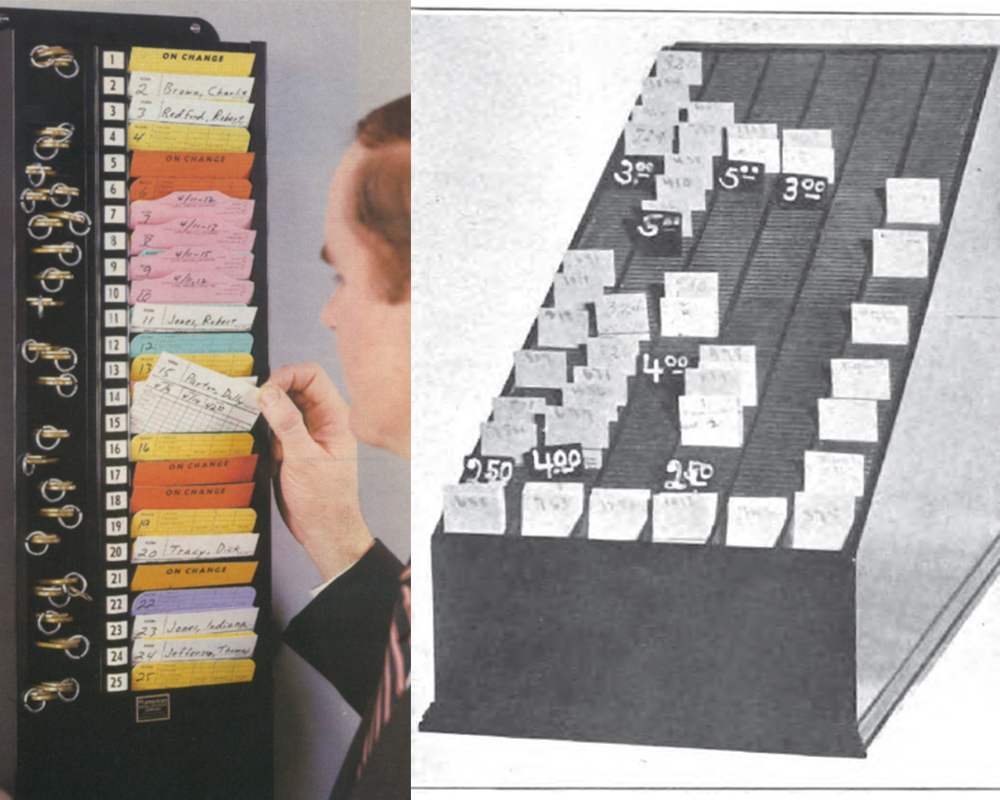
This sure looks convenient.
Lodging providers have it pretty easy these days. Computerized records, automated communication, central reservations offices, variable room rates, etc. There is still plenty of work to go around, but computers and digitization have completely changed the face of lodging operations in the space of a decade or two.
In days of yore, properties couldn’t change their rates on the fly to account for changing circumstances. Instead, these “tombstoned” rates, often set by season, were printed and sent as brochures, cards, and other hard copies all around the world. Thousands of pieces of printed collateral worked their way through the travel industry, setting the standard rates for the upcoming year. These prices were set in stone until the next “rack rate” update, and a poor estimate of demand or an insufficient understanding of the competitive environment could decimate profits between mailings.
Once prices and marketing materials were in the hands of travel agents and customers, calls started coming in to the reservations department. In order to coordinate the availability of rooms, a huge board-covered in dates and room types-covered the walls of the average reservations office. Caller requests were cross-checked with this huge tracking wall or other inventory system, and new reservations had to be written in the inventory ledger and sent to the inventory department, who then updated the reference board.
Everything in these older systems was manual. Telex and fax machines were cutting edge developments back in the day, making communication between travel agents, lodging providers, and airlines slightly easier. Imagine the reams, cabinets, and boxes full of old reservations, receipts, and unsent rack brochures! Think about the dozens of specialists, archivists, and operators necessary to run these operations!
The Times They Are a-Changin’
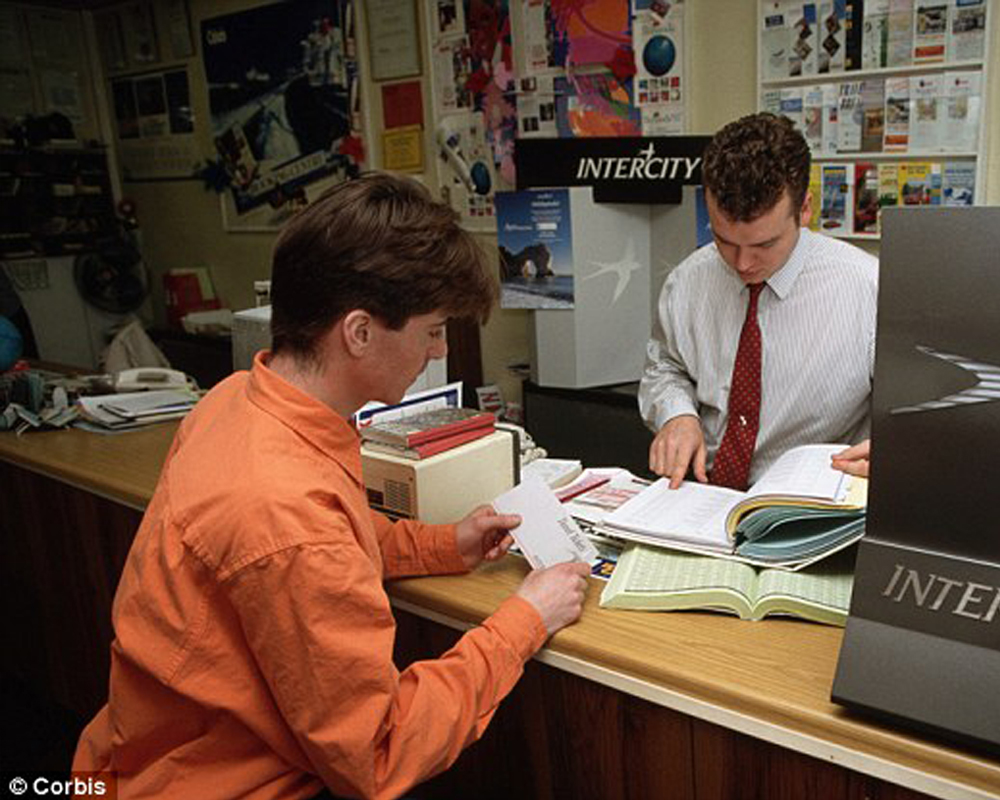
Cutting edge 90s tech.
It all seems so foreign in these interconnected, peer-driven times. Cloud-based servers, complex algorithms, and big data have replaced the carbon copies and inventory boards of decades gone by. Users book their own lodging, and travel agents are largely a fading memory. Travel has never been more convenient, nor have consumers ever been so empowered.
There have been casualties along the way. Travel agents were a booming business back in the day, but now they are gone. All those extra employees once necessary to keep track of reservations and inventory have been made obsolete. Whole industries have fallen apart and largely disappeared, and others have sprung up to service the new online economy.
As always, everything changes. For now, at least, that change has made it so much easier for ordinary people to manage their own trips and for properties to manage their businesses. As the pace of change accelerates, savvy entrepreneurs and forward-thinking customers keep their eyes locked on the horizon, looking for the next big change in the way we experience travel.
Related Articles
Things to Do During Park City’s Mud Season
Our Picks for Mountain Bike Rentals Park City
Deer Valley Ski Resort, Park City, Utah: An Overview
Park City Spring Break
Not only is Sundial Lodge one of Park City’s most luxurious Canyons Village properties, it is also one of its most convenient. This perfect ski-in/ski-out destination offers a complete range of convenient amenities, relaxing features, and exciting mountain activities. Find out more about what makes Sundial Lodge special with our fast facts infographic. Book your Park City Vacation rental at Sundial Lodge in Park City, click here!
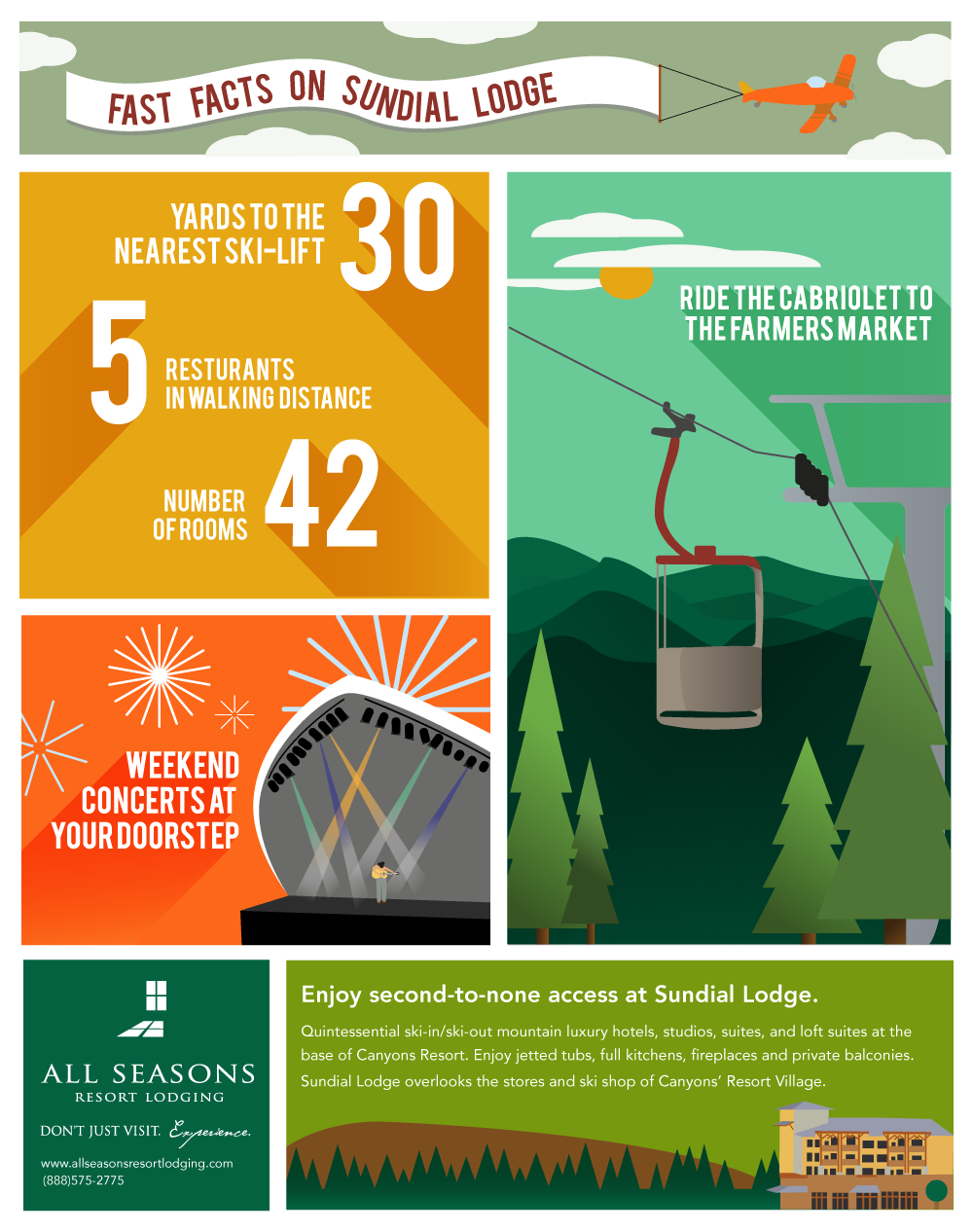
Click here to book your trip to Sundial Lodge at Canyons Village!
Related Articles
Things to Do During Park City’s Mud Season
Our Picks for Mountain Bike Rentals Park City
Deer Valley Ski Resort, Park City, Utah: An Overview
Park City Spring Break
Everyone has a road trip snack. I don’t just mean that everyone snacks on road trips (while they certainly all do). What I mean is that everyone has a perfect road trip snack, a warm, comfortable caloric blanket they wrap around themselves while putting the hammer down on 1,200 miles of open highway. Whether you’re looking for your own perfect nosh or just want to shake things up during a stint behind the wheel, try some of these tried-and-true flavors the next time you hit the road.
Judging a Snack by its Cover
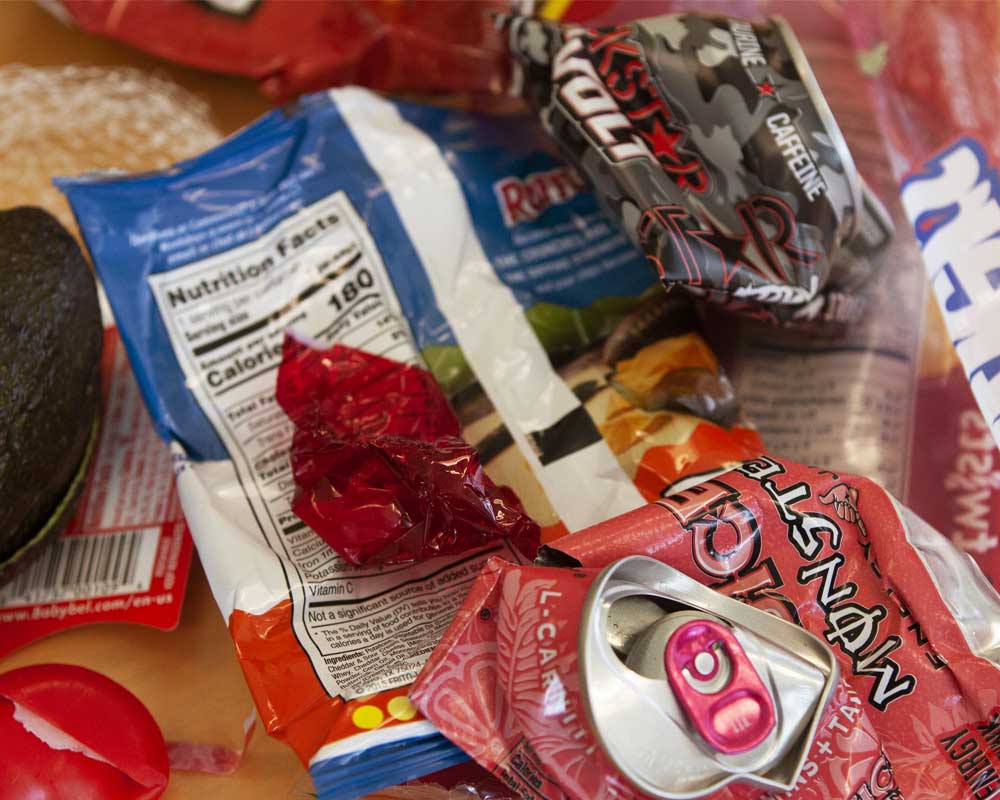
Mind the trash.
We argue that the perfect way to start the day is with a tall stack of egg stuffed between two pieces of properly boiled and baked bagel. Warm colors, lots of interesting décor, and no shortage of comfy seating make this out-of-the-way eatery a perfect place to warm up to the world in the early hours. Wasatch Bagel and Grill offers plenty of options when it comes to breakfast bagel sandwiches, from classic egg and cheese to more ambitious combinations, like the spicy Wasatch Huevos, with jalapeños, bell peppers, and grilled onions. Not everything on the menu is between two slices of starchy goodness, but all the best things are.
1. Gasoline is a petroleum product, which is itself derived from the biological remains of long-fossilized marine flora. Technically, these organisms predate what we consider dinosaurs, but the notion remains relevant.
The Healthy Stuff
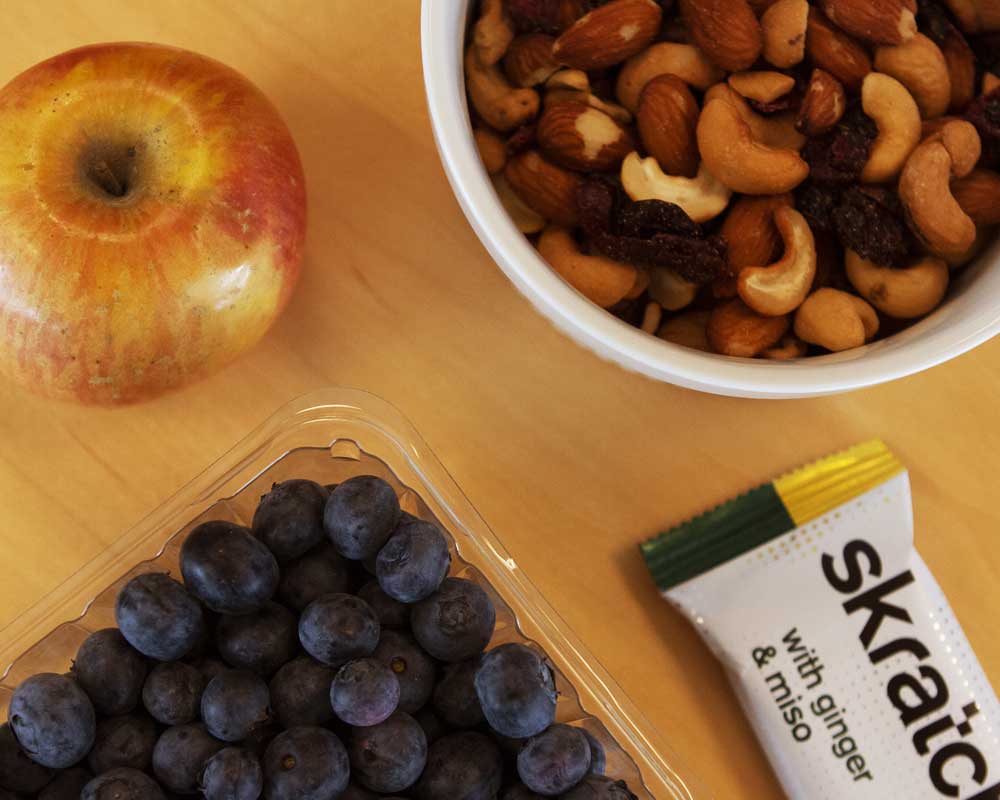
Some treats are a bit better for you than others.
If you aspire to something more than empty cookie wrappers and empty calories, you may want to try something a bit more nutritious. Fortunately, there are a ton of good-for-you classics that will get you to your next rest stop without clogging your arteries.
Fresh fruit is right at the top of the list. Apples, bananas, pears-whatever you fancy – come in their own wrappers, pack a sweet and sugary punch, and are a necessary part of any healthy diet. As a bonus, the remains are fully biodegradable, for which Mother Nature will thank you.
If you have a cooler on hand and a buddy to serve as a go-between, you can store some refrigerated options in the back. String cheese-or, even better, a bag of Babybels-will get you your daily calcium and is always fun to nibble apart, and a stock of hardboiled eggs bring the protein in a big way. Just make sure to peel the latter before you depart. Please don’t crack eggs and drive. If you still want “the protes” but don’t have a cooler, snap into some jerky for a meaty treat.
For something a bit more toothsome, I suggest a selection of hearty granolas. Granola is like a snack food chameleon. Whether you prefer something spicy and daring or a taste of the mild and sweet, you can buy or make a granola for almost every craving or situation. If the variety and heterogony of granola is too adventurous (or hard to chew) for you, there is nothing wrong with emptying a can of your favorite nuts as you roll across America. Cashews are, after all, one of nature’s perfect foods.
2. We’ll get this out of the way: yes, cashews are not nuts. They are fruits. Technically they are drupes-like a cherry or olive-just as watermelons are berries and strawberries are accessory fruit. But cashews are definitely a nut as far as any reasonable human is concerned, just like tomatoes are vegetables for import reasons under the Supreme Court decision in the case of Nix v. Hedden in 1893.
Junk and Stuff

A waist is a terrible thing to mind.
Not everyone wants to watch their weight while they watch the road. For some, road trips are among the few times it is appropriate to throw healthy eating and good food choices out the window, preferably at 80 miles per hour.
Candy is king for the junk-food connoisseur. Everything from chocolate that melts in your mouth, not in your hands to a seemingly endless variety of gummy animals, there are hundreds-thousands-of treats to explore. Sink your teeth into something sinfully sweet while you cruise, but keep an eye out for the inevitable sugar crash. Your passengers and fellow motorists would prefer you not take a nap while driving.
Satisfy your crunchy cravings with chips and crackers. Nothing invites one to graze as freely as an open bag of crispy potato chips. Just reach in and pull out a mouthful of crunchy, salty goodness as often as you want. Slam the whole bag in a few minutes, linger over individual chips for hours, pass them around the whole car, or keep them to yourself. Mix up your flavors and textures to keep things fresh and ensure that the fun don’t stop.
Hydration

Don’t forget to drink at least eight cups a day, even on the road.
The most important part of your road trip menu isn’t a food item at all. Staying hydrated is a crucial component of any successful trip, and your choice of beverage says a lot about the character of your trip.
Plain old water is, of course, the simplest and cheapest way to keep yourself hydrated. Sipping ice-cold water as you cruise is not only a refreshingly sweet experience, it will keep you awake, alert, and comfortable. As an added bonus, you can top off your bottle at pretty much every gas station and burger joint in the country. You can complicate water, of course, by purchasing carbonated, mineral, and/or flavored varieties, or by adding your own drink powder or flavoring agents. Sometimes, however, simplest is best.
Health-conscious drivers can use beverages as a way to keep up their fruit and vegetable consumption during the trip. Most roadside eateries and refueling stations are notoriously light on fresh produce, and packing your own liquid nutrition will alleviate the worst of the problem. This approach has drawbacks, though. Real 100 percent juice tends to be quite pricey, and usually requires refrigeration to avoid spoilage.
There are a billion sport/soft drinks to choose from, if that is your preference. You can recreate all those cheesy cola ads, try a sampler of specialty sodas, or just sip on an old favorite. Most beverages in this category are incredibly sugary and are best enjoyed sparingly. Even if you aren’t exactly observing the world’s healthiest diet, you could easily drink thousands of calories a day if you hit up the fountain drinks at every gas station.
Special mention goes to caffeinated beverages and energy drinks of all kinds. Sometimes you just need a couple more hours on the road to hit your destination. These liquid pick-me-ups offer the wakefulness and gumption you might need to cross the finish line, but their power is limited. Even the most powerful stimulants are going to run dry in a matter of hours, and many come with a dramatic crash. Make sure that your caffeine crash doesn’t turn into a high-speed crash by closely monitoring your energy levels. Pull over if you can’t stay wide awake and fully alert.
Putting it all Together

Make your own menu.
As I mentioned at the top of this article, everyone has a perfect road trip snack. Here are some favorites from around the All Seasons Resort Lodging office.
Michael
I’ve been taking the same snack stash with me on every road trip for 15 years. Every time I head across the country I need a bag of Twizzlers, a box of Wheat Thins or a bag of cheesy Combos, plenty of beef jerky, huge bottles of water, and a few Henry Weinhard root beers. Sometimes I mix it up with some Sour Patch Kids or other gummy candy instead of the Twizzlers, but I’m pretty stuck on my old favorites.
Kelley
I take my obsession with LaCroix along for the ride whenever I take a road trip. It gives me the strength and hydration I need to stay awake on long drives. When I’m not in the pilot’s seat, I munch pita chips and hummus for the protein and crunch I crave. When I need to take lunch with me in the car, I prefer one of my handcrafted tomato sandwiches: white bread (only white bread), vegan mayo, heirloom tomato slices, salt, and pepper. It is an unbeatable non-dairy twist on a Midwest delight. For extra snacking, I bring a bag of Barnana peanut butter banana brittle.
Olivia
My road trip nourishment consists of LaCroix, gin-gins (a ginger candy sent from the heavens), a burger or two, wasabi peas, fruit leather, and sea salt chips-all the while chain-chewing an endless supply of spearmint gum. As a native Floridian, my favorite Florida roadside treats are boiled peanuts, oranges, and jerky.
Related Articles
Things to Do During Park City’s Mud Season
Our Picks for Mountain Bike Rentals Park City
Deer Valley Ski Resort, Park City, Utah: An Overview
Park City Spring Break
You definitely shouldn’t come to Park City.
Our little Wasatch community is very boring, and nothing interesting or cool ever happens here. We certainly don’t have some of the finest snow on the planet, which would make Park City a world-class skiing and snowboarding destination that could conceivably play host to Winter Olympic Games.
There is hardly anywhere interesting to stay and very little in the way of eateries-just a couple hundred properties and restaurants to choose from. In fact, to help you avoid this absolutely dull alpine destination, look over this list of the top 10 reasons to not visit Park City.
There Are Too Many Restaurants

Photo courtesy of Trevor Hooper
There are so many restaurants in Park City. There are 72 restaurants in the Park City Area Restaurant Association alone, and they don’t even represent every eatery in town. Everything from succulent jewels of fresh sashimi to some damn fine pizza-by-the-slice has a home in Park City. Making a choice can be very overwhelming for the indecisive. Do I want a burger and bourbon, or a burrito? Heaven help you if you settle on a sandwich, as Back Door Deli has 50 of those to choose from. Local favorite taco shop El Chubasco offers just shy of 20 salsas every day at their salsa bar, an embarrassment of choices for even the simple task of adorning your carne asada.
There’s Too Much Nature

Moose don’t have a concept of right of way.
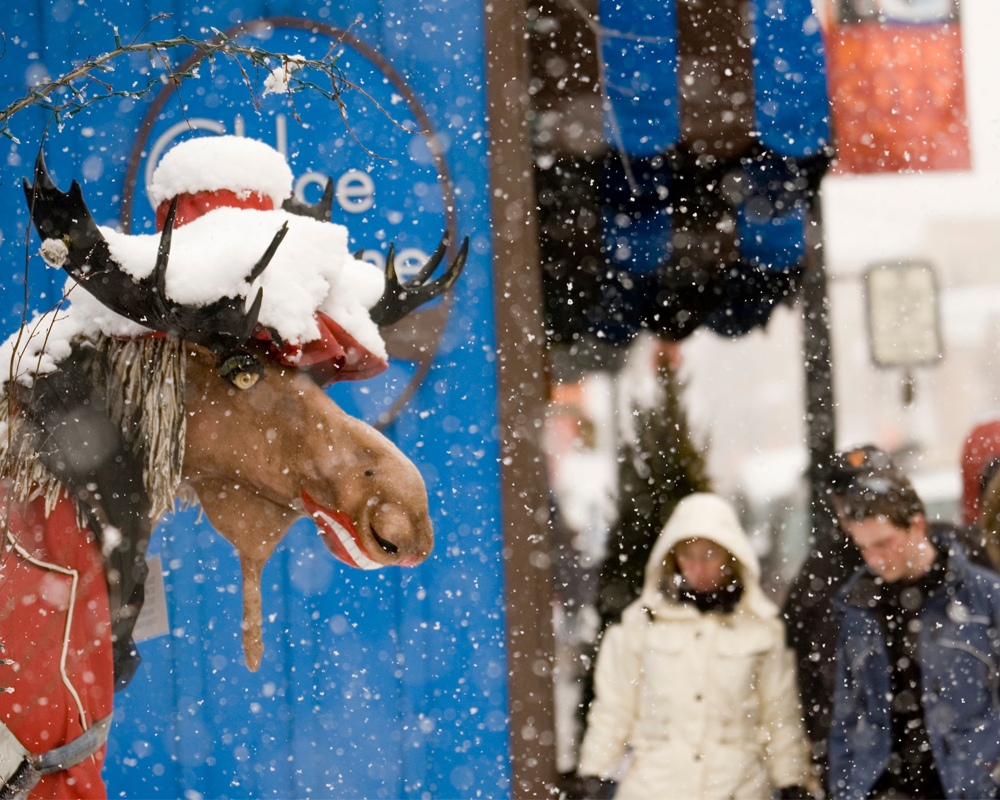
Park City is a part of the landscape. Roads and highways wend their way around well-worn travel paths, carved into the hills and slopes that gently cradle the little town. This isn’t a place for the native of the concrete jungle. You’re never more than a few yards from a quiet patch of nature in Park City. You may be forced to yield for a moose, or have deer in your back yard, and the streets tend to be anything but a straight grid. Look elsewhere if fresh air and refreshing breezes aren’t your cup of tea and you can’t bear the idea of leaving a paved surface.
There Are Too Many Festivals
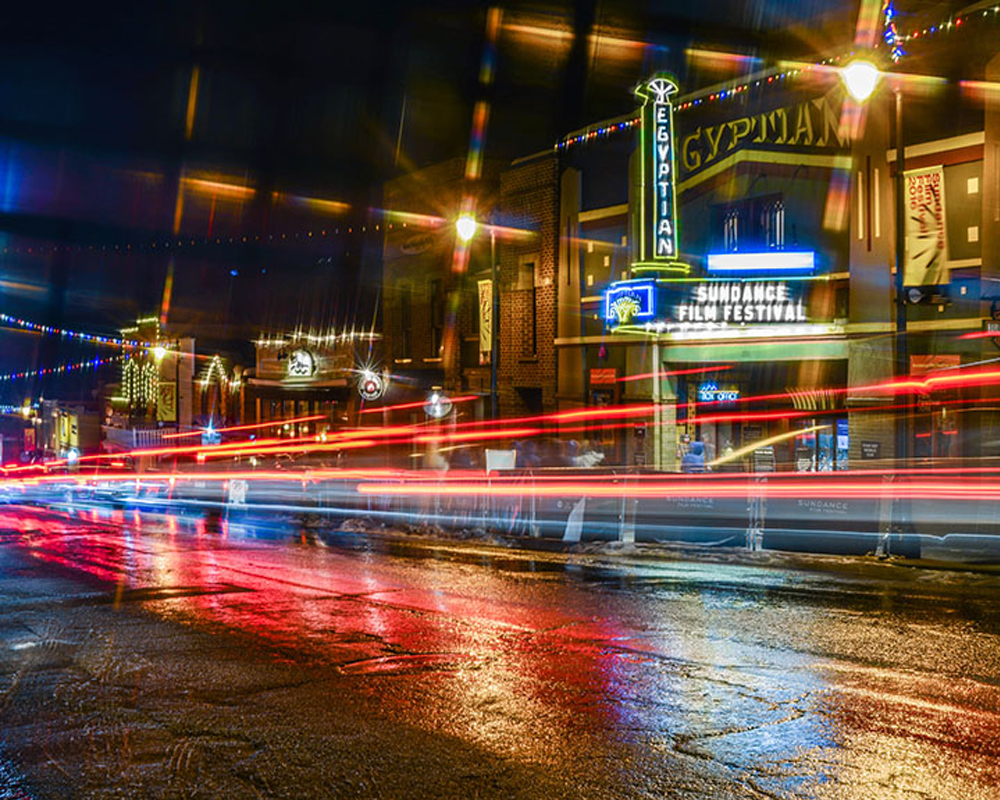
The Sundance Film Festival is big, but it isn’t the only festival in town.
One might think that having a world-renowned annual cinema festival *cough* Sundance *cough cough* attracting a global audience and top-tier celebrities would be enough for a little mountain community, but Park City is a bit extra about its festivals. In addition to the famous movie extravaganza, Park City also plays host to the annual Kimball Arts Festival, which includes more than 200 artists and an enormous number of other events and exhibitors; Deer Valley Music Festival, a collection of open-air concerts that bring the music to the warm summer nights; Savor the Summit, an unbelievable outdoor dinner party literally in Main Street; and the Park Silly Sunday Market, a collection of weekly summer bazaars and oddities that easily qualify as festivals in their own right. Leave some festivals for everyone else, please.
There’s Not Enough Parking
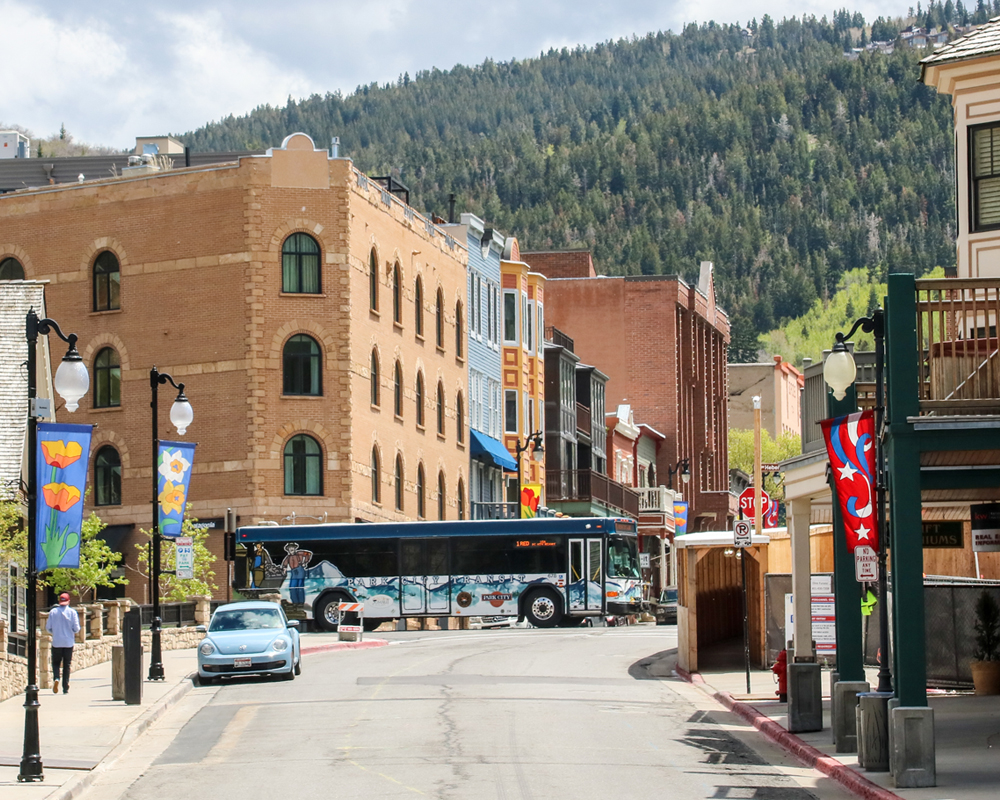
These buses will get you anywhere you might want to go.
There really isn’t enough parking, at least not enough for the more than 3,000,000 visitors trekking to Park City every year. Remember, this is a town with roughly 8,000 permanent residents. Trying to find a parking spot near the theater during the Sundance Film Festival may have been one of the labors of Hercules, depending on the translation. For those not determined to drive themselves everywhere nor in the service of Eurystheus, Park City does offer a robust-and totally free-public transportation system. These buses, some of them electric, whisk passengers from one corner of town to another in a convenient, efficient, and environmentally-friendly fashion. Shuttle service is stepped up a notch further during major events, seeing the deployment of additional buses along the most crowded routes, relieving the incredible pressure on Park City’s winding mountain roads with a constant stream of public transit vehicles.
Parking in Park City: Where to Park at Park City Mountain, Main Street, and More
There’s So Much Snow
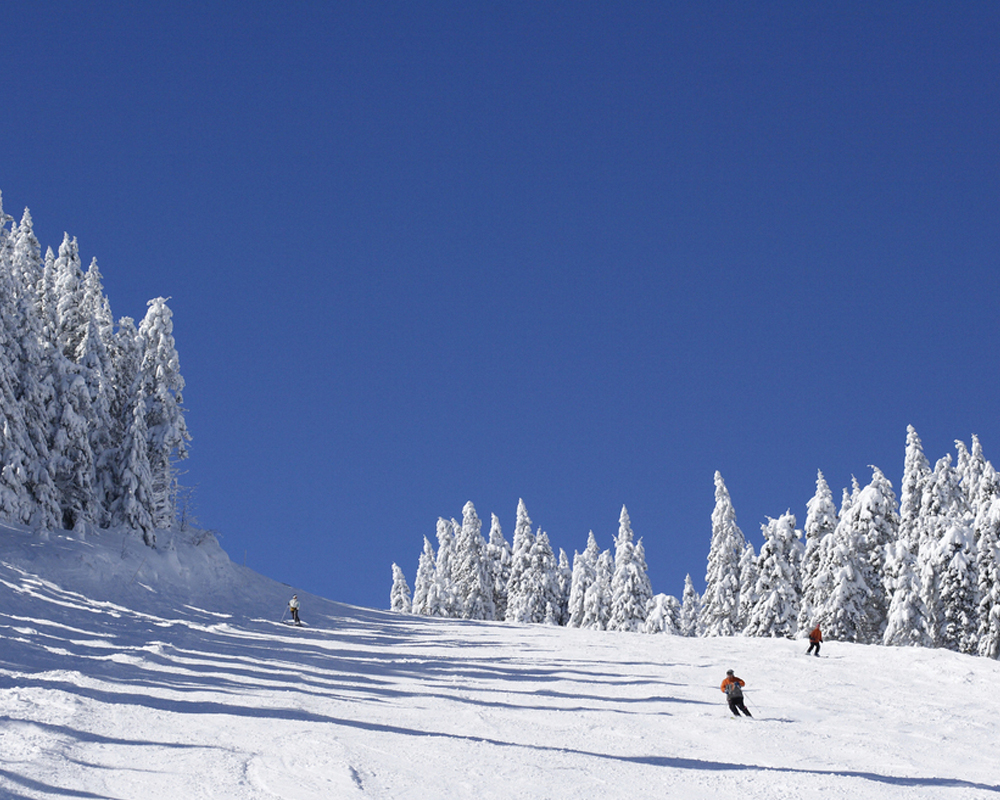
What could you possibly do with so much snow? Oh, wait…
On average, Park City receives 340 inches of snow during the winter season. To put that in perspective, you would be looking at nearly 30 feet of snow falling on every hillside, tree, house, car, and road in town. That is an obscene amount of powder-fluffy, sugary, perfect powder that glides like silk under a ski.
Surely there could be no fate worse than having access to dozens of feet of fresh, luxurious snow during your winter vacation to such a globally-acclaimed ski town. Only the efforts of a small army of snow plows and shovel-wielding groundskeepers manage to keep the whole town from being swallowed by winter’s puffy white fury every November-March. Try not to wander into any errant man-eating snow drifts if you do dare visit-you may be lost forever.
There’s So Much Sun

Play while the sun shines.
On the other end of the spectrum, Park City is so incredibly sunny every summer. The unending nuclear combustion that looms in the heavens above town beats down ceaselessly. It would almost be too much to bear, if not for the refreshingly cool breezes and fresh mountain air that suffuse the whole community. Instead of oppressive heat, the Park City summer sun offers a bright, vibrant reminder of the beauty that surrounds us on all sides and illuminates the gorgeous landscapes on every side. Even during the hottest parts of the year, Park City remains about 10 degrees cooler than the surrounding low-lying valleys. This makes it an ideal retreat against sweaty summer afternoons and sticky summer nights.
There Are Too Many Celebrities

Photo provided by the Sundance Institute. Photo courtesy of Tiffany Roohani
As if those A-list types weren’t already busy enough jet-setting around the globe, looking fabulous and enjoying the finer things in life, they keep hanging around Park City. Often glimpsed hanging about near some theater or another during Sundance or tearing down the slopes at one of the resorts during ski season, it isn’t uncommon to see musical mega-sensations or Hollywood elites enjoying Park City’s finest restaurants, lodging providers, and other attractions. Play it right and you could even bump into one of your favorite stars in their natural habitat. Be cool, though. Remember, they may be beautiful people, but they are still people.
I’m a Teetotaler
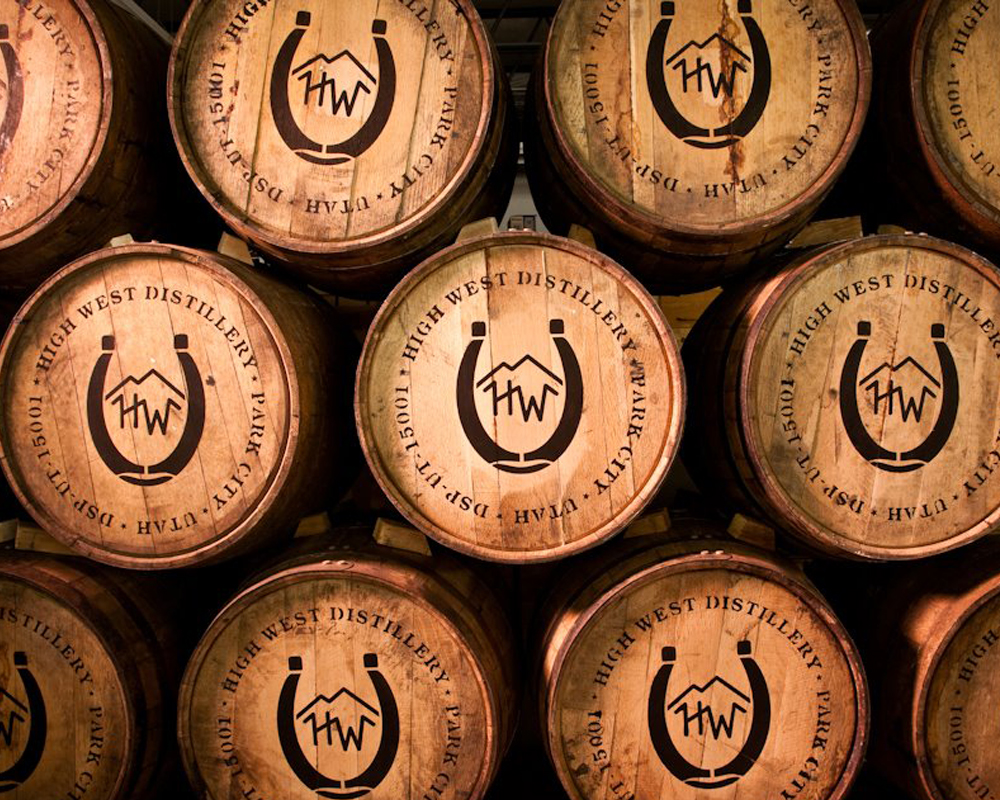
Photo provided by the Sundance Institute. Photo courtesy of Tiffany Roohani
Utah has a reputation as a decidedly dry state. While it is true that there are a number of unusual laws and restrictions on the books that can make the consumption of alcohol a more difficult prospect than some other areas, Park City doesn’t exactly have a case of the prohibition blues. In addition to a collection of fantastic bars, lounges, and dives, we also have a few homegrown flavors brewed or distilled right here. High West Distillery makes a mighty fine whiskey, and names like Park City Brewery, Red Rock Brewing, and Wasatch Brew Pub all offer their own take on craft brew, each worth a try whenever you are in town.
There Is Too Much Lodging to Choose From
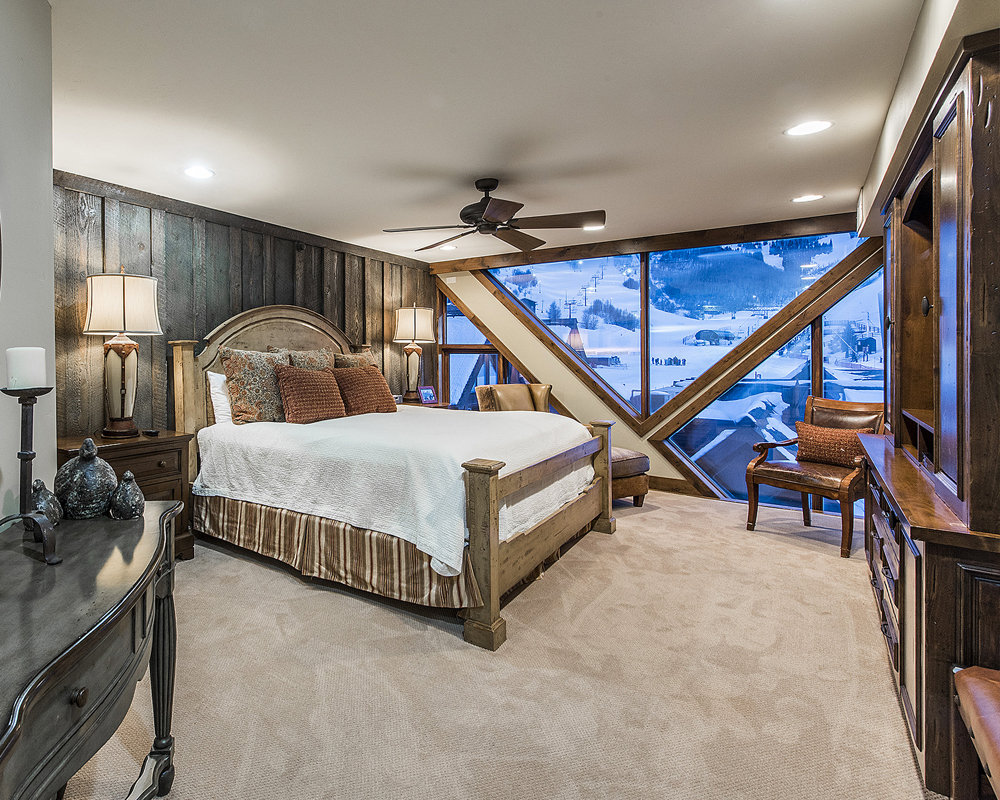
So much more than four walls and a bed.
Consumers are spoiled for choice when it comes to Park City lodging. The number of lodges, condos, vacation rentals, b&bs, and other accommodations-even in such a reasonably-sized community as Park City-approaches 200 establishments. All of that doesn’t even take into account the huge number of by-owner rentals and vacation homes eager to accept your vacation dollars.
The task of selecting the perfect lodging for your Park City stay seems like an insurmountable challenge. How can one possibly choose from so many options? Fortunately, we have just the thing for your getaway. With 16 properties and hundreds of rentals ranging from luxury multi-bedroom condos at the resorts to reasonably-priced downtown kitchenettes, All Seasons Resort Lodging has just the thing for any taste or budget. If you’d like something a bit homier, we also offer a collection of vacation homes in Park City, fully-equipped for an unforgettable stay.
Not sure where to start your search for lodging? Try our most popular searches. »
It’s So Expensive
You can enjoy Park City without breaking the bank.
Park City isn’t a cheap town. There are a lot of good reasons for that, but it doesn’t make the prospect of a visit any easier on the wallet. It is very easy to rack up a pretty ambitious bill with all the luxury lodging, gourmet restaurants, equipment rentals, and awesome extras. Once, again, though, we’ve got you covered. Not only are we going to help you find the perfect Park City lodging, we’re going to help you find the perfect price. Check out our deals page! Book now to take advantage of the best savings in Park City, whether you want to come by this weekend or next February. Get out there and use all the money you saved on Park City lodging to do something really cool.
Related Articles
Things to Do During Park City’s Mud Season
Our Picks for Mountain Bike Rentals Park City
Deer Valley Ski Resort, Park City, Utah: An Overview
Park City Spring Break
The journey of 1,000 miles begins with… a trip to the airport, generally. In this miraculous era of aviation, most long-distance travel is conducted, at least partially, by plane ride. There is a lot about air travel that is less than enjoyable. As a traveler, there are a few things you can do to improve the airline experience for yourself. Try these five tips the next time you fly, and you will find yourself soaring above the turbulence of the average travel experience.
Prepare for Disaster

Murphy’s Law is in full effect at airports.
No one wants disaster to befall their voyage. Odysseus wasn’t exactly looking forward to a date with Circe or a showdown with a cyclops. He just wanted to head home after a hard day at work. While Poseidon may not curse your trip to the airport, that doesn’t mean you shouldn’t be prepared. Between TSA-related delays, missed connections, and lost luggage, there is a lot that can go wrong.
Your best chance of experiencing a flawless flight comes with careful preparation. Get to the airport earlier than you thought necessary, by about an hour. Pack a quick change of clothes in case a baggage hauler misplaces your unmentionables. Go directly to your connecting gate before wandering off to that pretzel stand. The more uncertainty you can eliminate and the larger the time buffer you can give yourself, the better.
Hope for the best, but always prepare for the worst.
Assemble a Media Buffet

Don’t forget a good pair of earbuds.
Odds are, you have hours and hours of empty time ahead of you once you pass through that metal detector. You may as well binge watch The Office again while you wait. It will take some planning to pull off correctly, though. You aren’t going to make it from one end of your trip to the other on a single charge, that’s for sure.
Make sure to fully charge your phones, tablets, laptops, and more esoteric gizmos the night before your voyage. Also, make sure you’ve packed every charger you are going to need, including any adapters necessary for a foreign connection of the direct current kind. It probably isn’t going to hurt to bring along a power brick or two while you are at it, just in case every outlet in the airport is being camped by Insta addicts desperate for another dozen selfies with their boarding passes.
By the same token, try to avoid dependency on public WiFi or running up your data plan by downloading as much content as you can beforehand. Queue up those Spotify playlists, download any games you want to try, or load that steamy romance on your Kindle. You never know when LAX is going to be experiencing a bad data transfer rate day.
Game On

Hive is portable, durable, and addictive.
If you prefer face-to-face interaction, pack along a couple of board or card games. There are plenty of pocket-sized games that require a tray table or less of space to enjoy for any number of players.
For two, grab Hive Pocket for a bug-themed strategic showdown, or maybe a bit of Jaipur will keep you trading all the way from JFK to SLC. For up to four, wild deductions will have you laughing the delay away in Love Letter, and Sushi Go! keeps you from regretting that mediocre $20 California Roll. For larger groups, try something like Zombie Dice in the terminal, though you probably can’t chuck a bunch of dice while aloft, if for no other reason than the noise that shaking a cardboard tube full of 13 dice can cause.
Snack Attack
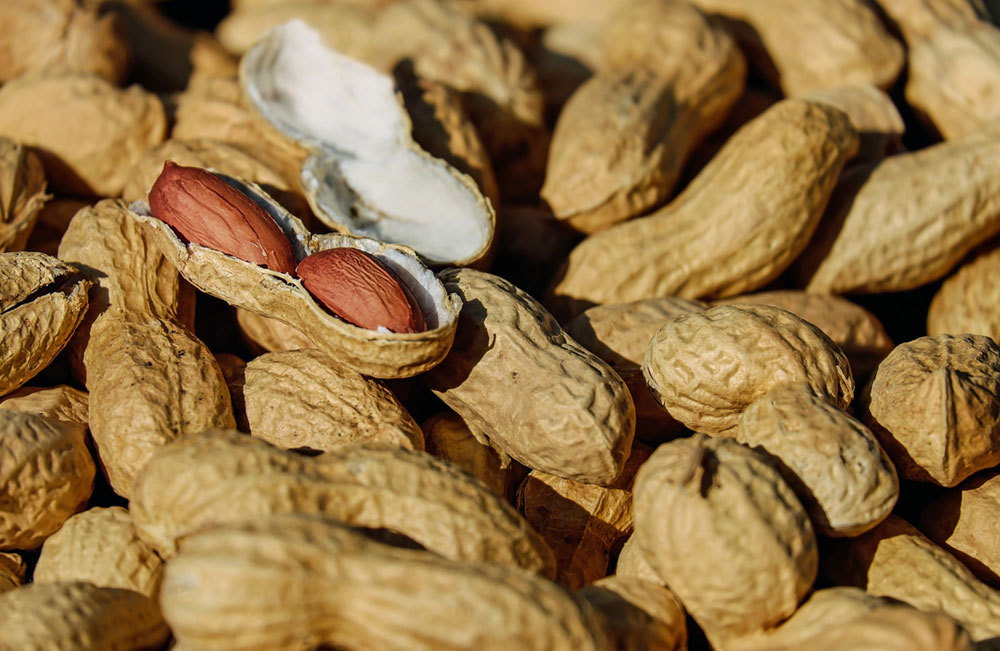
If only they were so appetizing in those little mylar baggies.
Let’s face it, airline peanuts are so bad they are almost poisonous (or are actually poisonous, if you have a nut allergy), and post-security food costs about four times as much as it is worth at the best of times. To help you regulate your blood sugar and stave off hanger-induced viral YouTube incidents, you should bring your own nibbles in your carry-on. No, you aren’t going to smuggle them through the TSA checkpoint like a kid with a box of grocery store Junior Mints at the movie theater. There are plenty of tasty options that you can take through the lines without a hassle.
Forget anything with any liquid in it. Homeland Security regularly misses actual firearms in carry-on luggage, but, somehow, they are going to accuse you of trying to join ISIS because they found a packet of honey from that KFC you visited last week. No yogurt, peanut butter, cans of tuna, or PBJs. The 3-1-1 rule is way more of a headache than it is worth. Stick to dry goods and packaged snacks. Grab your own jerky, crackers, dried mangoes, trail mix, pita chips (no hummus, though), or Swedish Fish, and laugh at the fools stuck glumly masticating those terrible bags of glorified sawdust.
Interestingly, the TSA website states that you can bring a live lobster through security, but it is probably frowned upon to try eating a raw shellfish at 35,000 feet. But, to each their own. The TSA might be cool with it, but Delta and Southwest probably aren’t.
Snack Attack

If only they were so appetizing in those little mylar baggies.
Let’s face it, airline peanuts are so bad they are almost poisonous (or are actually poisonous, if you have a nut allergy), and post-security food costs about four times as much as it is worth at the best of times. To help you regulate your blood sugar and stave off hanger-induced viral YouTube incidents, you should bring your own nibbles in your carry-on. No, you aren’t going to smuggle them through the TSA checkpoint like a kid with a box of grocery store Junior Mints at the movie theater. There are plenty of tasty options that you can take through the lines without a hassle.
Forget anything with any liquid in it. Homeland Security regularly misses actual firearms in carry-on luggage, but, somehow, they are going to accuse you of trying to join ISIS because they found a packet of honey from that KFC you visited last week. No yogurt, peanut butter, cans of tuna, or PBJs. The 3-1-1 rule is way more of a headache than it is worth. Stick to dry goods and packaged snacks. Grab your own jerky, crackers, dried mangoes, trail mix, pita chips (no hummus, though), or Swedish Fish, and laugh at the fools stuck glumly masticating those terrible bags of glorified sawdust.
Interestingly, the TSA website states that you can bring a live lobster through security, but it is probably frowned upon to try eating a raw shellfish at 35,000 feet. But, to each their own. The TSA might be cool with it, but Delta and Southwest probably aren’t.
Related Articles
Things to Do During Park City’s Mud Season
Our Picks for Mountain Bike Rentals Park City
Deer Valley Ski Resort, Park City, Utah: An Overview
Park City Spring Break
The City Different-also known as Santa Fe- is a beautiful, historical, cultural, culinary, and natural destination. We have previously talked about some of the amazing attractions to enjoy during your time in Santa Fe. Today, we are sharing the perfect way to enjoy those attractions: walking tours.
Getting out into the Southwest air, stretching your legs, and having a great time makes for a perfect afternoon of Santa Fe adventure. No matter what draws you to The City Different, you will find a walking tour that will take you all around town with plenty to see, learn, and do. We’re highlighting just a few below, but be sure to look around for other exciting tours to enjoy.
Historical Downtown Walking Tours
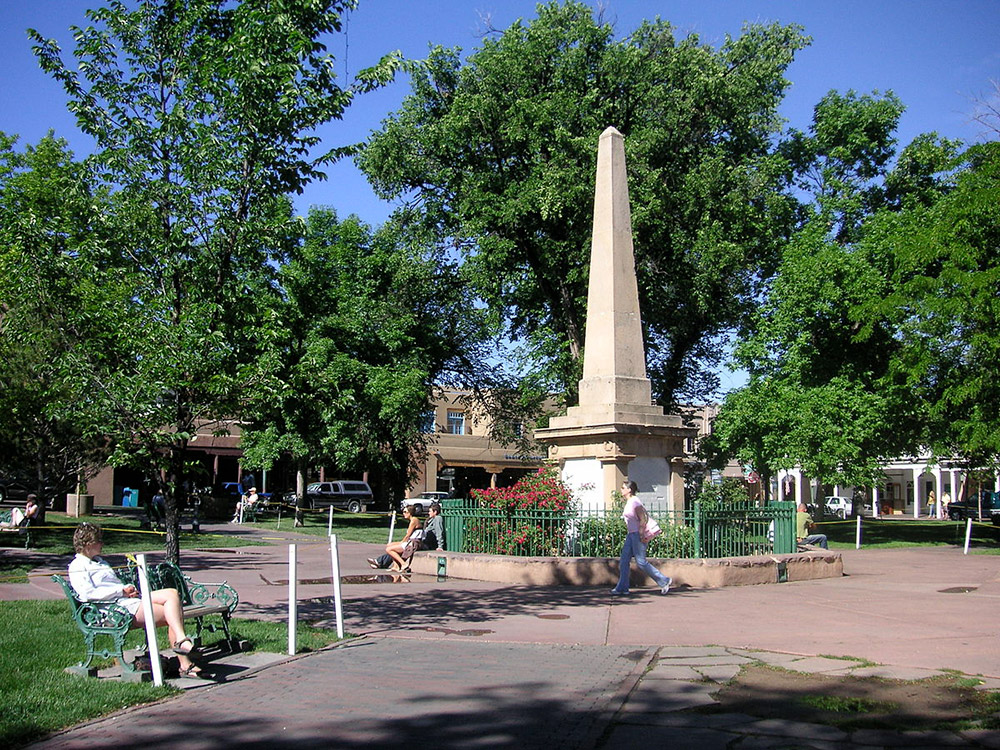
Historic Santa Fe Plaza
Santa Fe is the oldest state capitol in the country. It includes a number of incredible architectural treasures and notable historical highlights. Many of these exceptional buildings, sites, and markers lie within the downtown area, surrounding Santa Fe Plaza.
The New Mexico History Museum offers walking tours of the downtown area, replete with hidden historical tidbits. Many private guides and companies offer walking tours of the downtown area, highlighting any number of beautiful buildings, enthralling anecdotes, and intriguing insights.
There is even an association of Santa Fe tour guides to help you choose the right experience.
The Original Santa Fe Ghost Tour
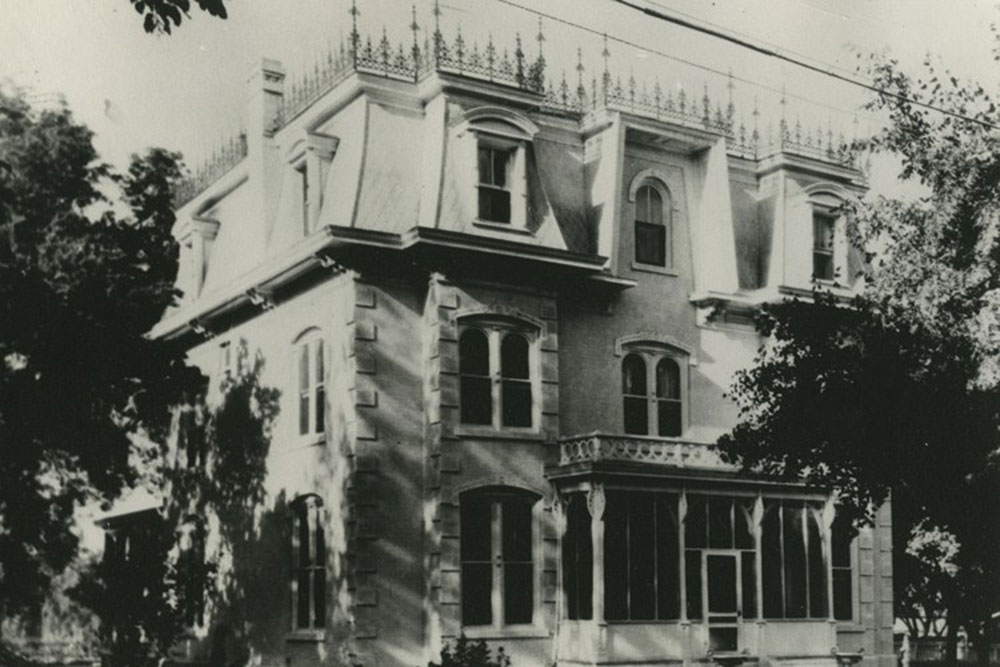
The haunted La Posada Hotel
For a spooky good time, try a ghost walk. With over 20 spirits to seek, this walking tour offers plenty of unsolved mysteries, strange occurrences, and volumes of first-hand encounter stories. Exceptional storytelling skills and an encyclopedic knowledge of local occult history makes for a hauntingly good evening of supernatural fun.
Learn more and schedule your ghost tour here.
Restaurant Walking Tours
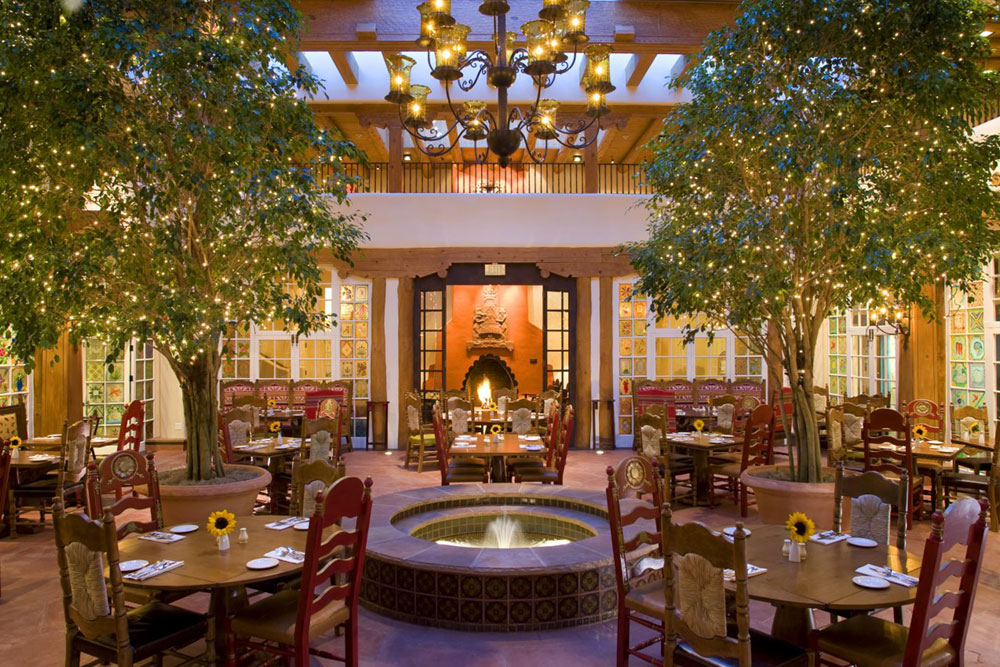
La Plazuela At La Fonda
In addition to all the history and art on display in Santa Fe, there are dozens of delicious restaurants to sample. If just visiting for a good meal isn’t enough, you can try a more involved experience with one of Santa Fe’s restaurant walking tours. Try special dishes, chat with chefs, and share your love of good food with other connoisseurs as you walk from dining room to dining room. The tours are varied in menu and culinary discipline, giving you plenty of new taste experiences with each trip.
Pick a restaurant tour and make your reservations here.
Self-Guided Walking Tours

Tour Santa Fe’s biggest attractions
If you want to take the city at your own pace, a number of pre-made walking tours are available to download on your device of choice and take with you as you explore Santa Fe. Your phone’s GPS will do the heavy navigational lifting. All you have to do is follow the directions and enjoy the sights and activities.
Each tour has a different theme, from art to religion to nightlife. If you don’t fancy the tour you are on, just boot up another one and try something different. This is the most relaxed way to tour town, as you don’t have to worry about other guests or impatient guides. Enjoy Santa Fe at your own pace.
Download your self-guided tours here.
Desert Walking Tours
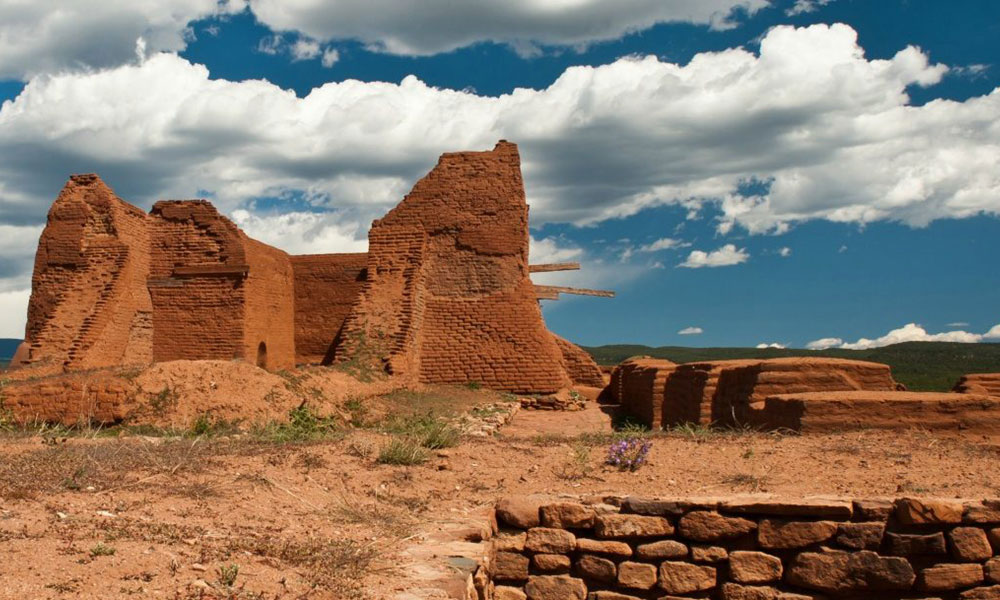
Native American ruins outside Santa Fe
There are plenty of amazing sights and sites outside the Santa Fe area. National Parks, historic ruins, and native settlements are all to be found as you leave the city itself. Most of these tours require transportation to reach the site, but feature significant walking and opportunities for learning and storytelling. With such a rich heritage stretching across hundreds of years and thousands of square miles, there is more than enough to experience in the New Mexico desert to fill several vacations.
This tour company will take you just about anywhere near Santa Fe you may want to go.
Related Articles
Things to Do During Park City’s Mud Season
Our Picks for Mountain Bike Rentals Park City
Deer Valley Ski Resort, Park City, Utah: An Overview
Park City Spring Break
Santa Fe Railyard Off the Beaten Path Food Tour
Park City’s top property management company has been making memories since the last millennium. Sit down with us and hear the All Seasons Resort Lodging story from the lips of the man who started it all, 18 years ago. We ask Alan Finnegan, president of All Seasons Resort Lodging, all about the history, philosophy, and future of his company.
All Seasons Resort Lodging [ASRL]: How did you start All Seasons Resort Lodging? What were the circumstances that led to the founding of the company?
Alan: The parent company I worked for prior to starting All Seasons was called Village Resorts; and that company was acquired by Premier Resorts. Then Premier Resorts was being sold on the market. They were trying to sell Premier Resorts to a third party like Merrill Lynch, and things like that. The board of directors wanted to know what was going to happen to me if that happened, and I didn’t know. They wanted to know if they could put me in business, or if I would be interested in doing this on my own, and I said I would. So that’s how I started All Seasons.
ASRL: Did you start it with a clear corporate identity in mind, or did you just kind of jump in and think, “This is what I’m doing now, so I guess I’m doing it?”
Alan: I felt like all of the pieces of my career had led to this point. Though the risks were large, I felt like the pieces of the puzzle wouldn’t have fallen into this place if it wasn’t meant to be. The opportunity seemed much greater than the risk. I never thought of failure; I never thought of “what if” or “this might not work”. It never entered my mind that this might not work. It seemed like it was the time for me to go off on my own.

Alan Finnegan, president of All Seasons Resort Lodging
ASRL: Everybody’s got to start somewhere. Where did All Seasons Resort Lodging start? Where was your first property? What did you have?
Alan: We had Silver King Hotel, we had Silver Cliff Lodge, and All Seasons Condominiums. We had three properties. We had ninety rooms between the three properties, and probably twenty employees.
ASRL: And where did it go from there? How did things start to grow?
Alan: At that point, the board of directors that put me in business wanted me to stay as a general manager until 2002. We started in 1999-June 1st of 1999-when we took over Silver King Hotel, Silver Cliff, and All Seasons. And I had to stay for three years, through 2002, before they would allow me to hire another general manager to manage Silver King and allow me to grow. During that process, I had an opportunity to purchase the management contract of Carriage House Condominiums, which we did in the fall of 2002. In the fall of 2001, I had the opportunity to take over Crestview, which was a brand new condominium project that was just being built, and PowderWood. I purchased that management contract from Donna Van Buren, Greater Park City Properties, and we opened the Crestview with a stay by 302 secret service guys on January 17 for the 2002 Olympics. Then in the fall of 2002, I picked up Carriage House and we continued to grow from there.
I always had the vision of wanting to be outside of the state of Utah. I’d worked for a company called Village Resorts that managed 16 properties around the United States and Hawaii, resort destinations, and I wanted to model my company after that. But I didn’t know how to get outside Park City. I hired Tom Overson, who was with Marriott. He had worked in multi-property destinations. I felt like he would allow us and show us how to be able to manage from afar with a corporate location, and then having properties located outside the state. We brought him in, and then I pursued purchasing management companies. In 2006, we purchased a San Diego property management company. Then, in January 2007, I believe we purchased Santa Fe.
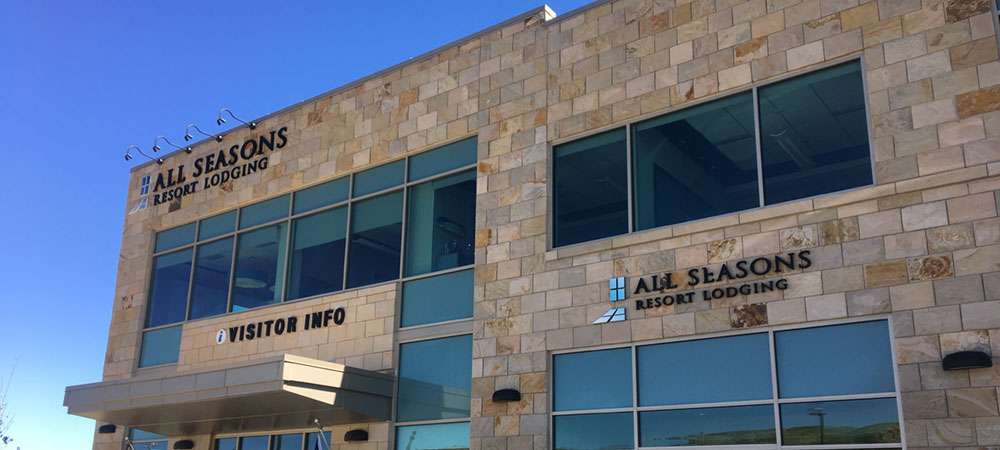
The All Seasons Resort Lodging office in Park City
ASRL: Where in all of that did you feel like you really had something? Was there a “big break” moment, or did you just look at it one day and decide that, “man this is really going places?”
Alan: At that point, the board of directors that put me in business wanted me to stay as a general manager until 2002. We started in 1999-June 1st of 1999-when we took over Silver King Hotel, Silver Cliff, and All Seasons. And I had to stay for three years, through 2002, before they would allow me to hire another general manager to manage Silver King and allow me to grow. During that process, I had an opportunity to purchase the management contract of Carriage House Condominiums, which we did in the fall of 2002. In the fall of 2001, I had the opportunity to take over Crestview, which was a brand new condominium project that was just being built, and PowderWood. I purchased that management contract from Donna Van Buren, Greater Park City Properties, and we opened the Crestview with a stay by 302 secret service guys on January 17 for the 2002 Olympics. Then in the fall of 2002, I picked up Carriage House and we continued to grow from there.
I always had the vision of wanting to be outside of the state of Utah. I’d worked for a company called Village Resorts that managed 16 properties around the United States and Hawaii, resort destinations, and I wanted to model my company after that. But I didn’t know how to get outside Park City. I hired Tom Overson, who was with Marriott. He had worked in multi-property destinations. I felt like he would allow us and show us how to be able to manage from afar with a corporate location, and then having properties located outside the state. We brought him in, and then I pursued purchasing management companies. In 2006, we purchased a San Diego property management company. Then, in January 2007, I believe we purchased Santa Fe.
ASRL: That’s the core value of All Seasons Resort Lodging?
Alan: It is. That was the core value as it started and I actually still have that original piece of paper.
The original All Seasons Resort Lodging logo
ASRL: That’s the core value of All Seasons Resort Lodging?
Alan: It’s the same! It’s constant. I think that we’ve refined our language a little bit, to more clearly define how that works in our company, but it’s still the basis of what we do. We take care of an owner’s asset because they’re not here, we try to proactively communicate with them, and generate the highest rental returns that we can out of any of our competitors.
ASRL: What is the single feature of All Seasons Resort Lodging that you’re the proudest of?
Alan: Hmm. What am I the proudest of? I’m the proudest of how we have continued to adapt as a company to our owner’s expectations, our consumer’s expectations and needs, and our employees.
We’ve all grown in the last 18 years, and, in that process, I believe that I’ve been open to change, to adapt to what consumers need and what owners need. Those things are different today than what they were 17 years ago. I think that’s my most important thing that I’ve most proud of, is that we continue to listen, and to ask questions about what we can do better. We’re not ever satisfied with the status quo. I always want to be better. I know we can be better. And that’s really important to me. I want to communicate that to our owners, our guests, and our employees that we’re trying to be better
ASRL: Speaking of change, what’s the change that has surprised you the most over the course of this endeavor. What’s the thing that you never saw coming?
Alan: Oh, the internet! Definitely the internet. That’s the funny part. When I started, we used print media, fulfillment pieces, little cards people would fill out and send back to us saying that they wanted information on our hotels. We would send them a brochure. The internet became the hub of all communication. I never saw that coming, or else I would have purchased parkcity.com. I would have purchased a lot of URLs. I had no idea about how that was all going to work in the very beginning. However, we did jump on it pretty quickly, and we really bought into understanding that a consumer was now starting to book online. We started with 1% of bookings being online, and then 5% of bookings being online, and it’s grown today to be almost 100% of our bookings taking place online. So yeah, the internet and how consumers booking habits have evolved and changed.
ASRL: Speaking of change, what’s the change that has surprised you the most over the course of this endeavor. What’s the thing that you never saw coming?
Alan: It did in 2008 and 2009. The economic downturn was very, very hard for us. We certainly were caught up in that economic downturn where consumer spending, discretionary income was much smaller. The first thing to go is travel. The last thing to come back is travel. During that period of time, we had to make some significant changes. I chose to not lay off people to get through that period of time. We all took pay cuts in the company, from the president down to a bellman. We all took pay cuts. Then I had to reach out to the private sector to secure enough capital to get me through that slow period, because, at that point, the banks had been burned, or had lost money with a number of property management companies going out of business. They were not willing to lend me money to get through that period, I was able to secure some funding from the private sector and get us through that.

Hanging out at a company picnic
ASRL: How did that go for the owners during that period?
Alan: You know, I think the owners were understanding. They were going through the same experience in their personal lives. It was something that happened to the whole country. We were able to, again, proactively communicate with them what we were doing to try and minimize the impact to rental income during this process. We were very successful in that. We knew we were successful by using a competitive set analysis, a market share analysis, that the city of Park City puts out. And during those two, three, four years of ’09, ’10, ’11, we could see that our market share was greater than our competitors. Our revenues were higher than our competitors, though they were still a down. We might have been down 16%, the market was down 30%. We were able to communicate to our owners that we were doing a good job minimizing the impact.
ASRL: Speaking of owners being understanding, if there was one thing that you wish that more owners could understand about All Seasons Resort Lodging, or one thing that is frequently misunderstood, how would you address that?
Alan: I think that, because owners have had experiences with property management companies that were all about the money, and didn’t care about the owners or the guests, they’ve had bad experiences. If there was one thing that I would want to share with owners, it’s that, for us, it’s not about the money. I mean, certainly, we need to be profitable as a company to sustain our employees and run a successful business. But we’re not financially driven to make that happen. What we’re driven on by is customer service to our guests and our owners.
We care about our owners. I want every owner to have a great experience with All Seasons Resort Lodging. And it’s really disappointing when we make mistakes that hurt our owners, or that they perceive that we aren’t doing as good a job as we could, because I want to be doing the best job. I want to be better than everybody else. And I know that’s not always about making the owners more money, though that’s really important. It’s about making the owners feel like they are special and we care about them. Because I do! That’s the bottom line. We do. We care about our owners, and we care about our guests. I want everybody to have a great experience with us.
ASRL: That ties closely to the next question. What is the single most interesting part of property management to you as an individual?
Alan: The single most interesting part to me about being a property manager is how it’s always changing. Nothing stays the same. Just when we figure out how to be really effective in the current marketplace, something changes. And if that’s in a consumer trend, technology-certainly-or how the consumer uses technology, or anything else, that changes how we have to do our business. It’s exciting where nothing stays the same! We have to always be adapting, changing, and making decisions that ensure we’re in business for years to come. That takes a lot of foresight, luck, and good decision making.
Front desk staff with a hard-earned award
ASRL: That ties closely to the next question. What is the single most interesting part of property management to you as an individual?
Alan: I have faith that in five years we will be right where we need to be. I don’t try to force where I believe we should be in five years. I think the owners and the consumers drive where we’re going to be five years from now. As long as we’re open-minded-willing to adapt and change-I think we’ll still be providing that exceptional service, meeting guest’s expectations, and growing our owner base.
Because we’re doing it differently. We’re doing it with integrity, we’re doing it with honesty, and we make mistakes, and, when we make mistakes, I’ve always shared with all of our managers that we own our mistakes. We share that we made a mistake, and then we fix it. But we try not to hide our mistakes and say, “we didn’t do this.” We own it, and then we change so that we don’t ever do that again.
Mistakes happen when you’ve done something twice. There’s a process where we learn a lesson, when something goes differently than we expected or wanted it to. We have an opportunity to improve on that. If it happens to us a second time, it’s a mistake. But, ideally, we put in place procedures that ensure we’ve adapted to that new information, or that new expectation from the owners and the guests. These are people that allow us to have them come back again and again, and trust us with their property. It’s a big deal. I mean, these properties today are worth anywhere from $500,000 to a million plus dollars, and they’re not here. They need somebody they can trust to take care of their property; and we want to be that company.
ASRL: What do you think the future holds for property management in general?
Alan: I think it’s changing right now. I think that we’re in a really interesting time, when, because of Airbnb, because of VRBO, HomeAway, and FlipKey, now owners can manage their own units, and have access to the consumer in a way that they’ve never had before. Similarly, we actually have more access, because we have relationships with the online travel agencies. We have access to more consumers because we understand keyword phrases. We know when they’re searching for lodging, we understand how they’re searching for lodging. We’re able to put our company in that position to be recognized by a consumer when they come to look for lodging.
The average owner today is not as interested in services for the consumer, which concerns me. We provide a higher level of service for our consumers by having bell service, or by having van service, or by having daily housekeeping. And a lot of those services are being neglected or eliminated so they can give an owner a higher percentage of that income than we have done in the past; because we’re providing additional service. And I think, in the long term, that’s impacting the guest experience. I don’t know how that’s going to shake out.
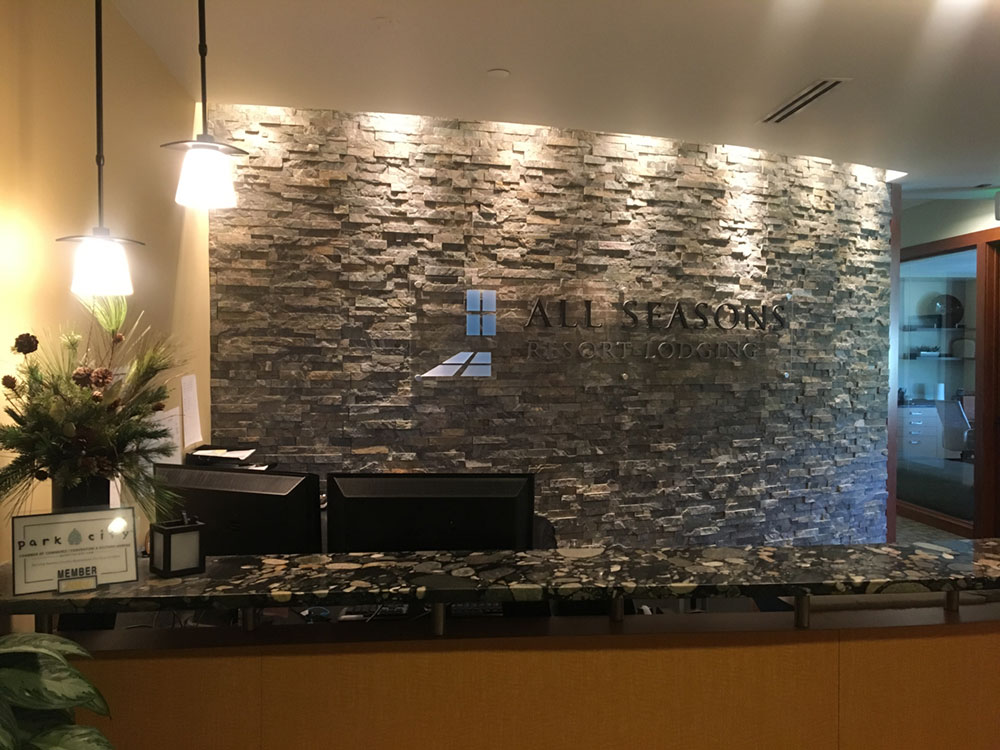
The All Seasons Resort Lodging front desk.
Book Park City lodging through us for your next vacation to experience our great service firsthand!
Related Articles
Things to Do During Park City’s Mud Season
Our Picks for Mountain Bike Rentals Park City
Deer Valley Ski Resort, Park City, Utah: An Overview
Park City Spring Break