
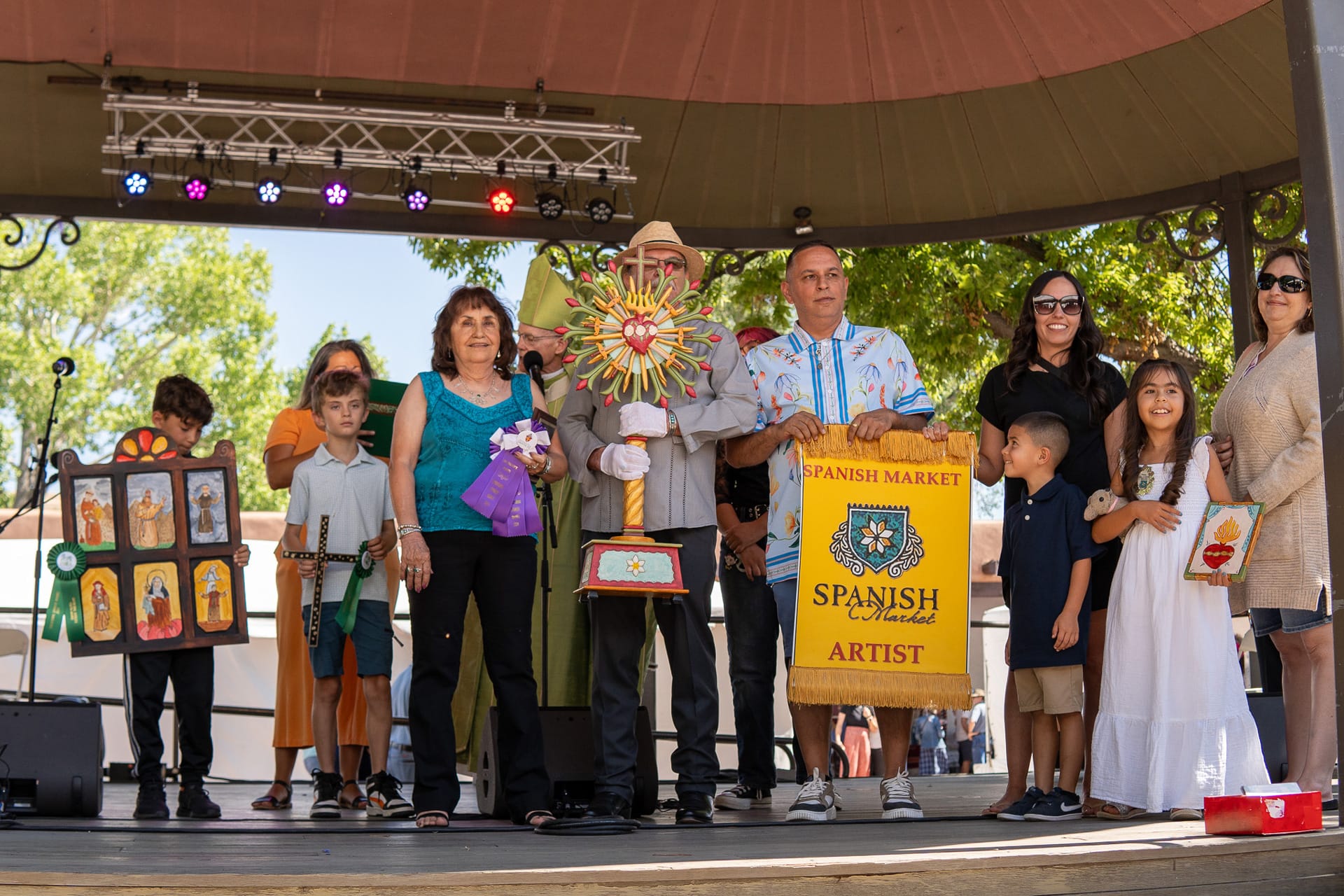
The scent of piñon mingles with the smell of fresh tortillas. Carved wooden saints line booth after booth, their painted eyes calm and ancient. An artist at the corner table hammers a tin frame with the same technique her grandmother taught her — the same technique women in New Mexico have used for three centuries. This is the Santa Fe Spanish Market, and in 2026, it turns 100.
The Traditional Spanish Market returns to the historic Santa Fe Plaza on Saturday, July 25 and Sunday, July 26, 2026 — and this year carries a weight that no other year has. A full century of unbroken tradition, celebrated in the city where that tradition was born. Whether you have been coming for years or this is your first trip to Santa Fe, 2026 is the year to experience it.
This guide covers everything you need: what the market is, when to arrive, how to navigate it, what you’ll find there, and how to make a full weekend out of one of the American Southwest’s most extraordinary cultural events. That last part — where to stay — matters more than most people realize. Keep reading.
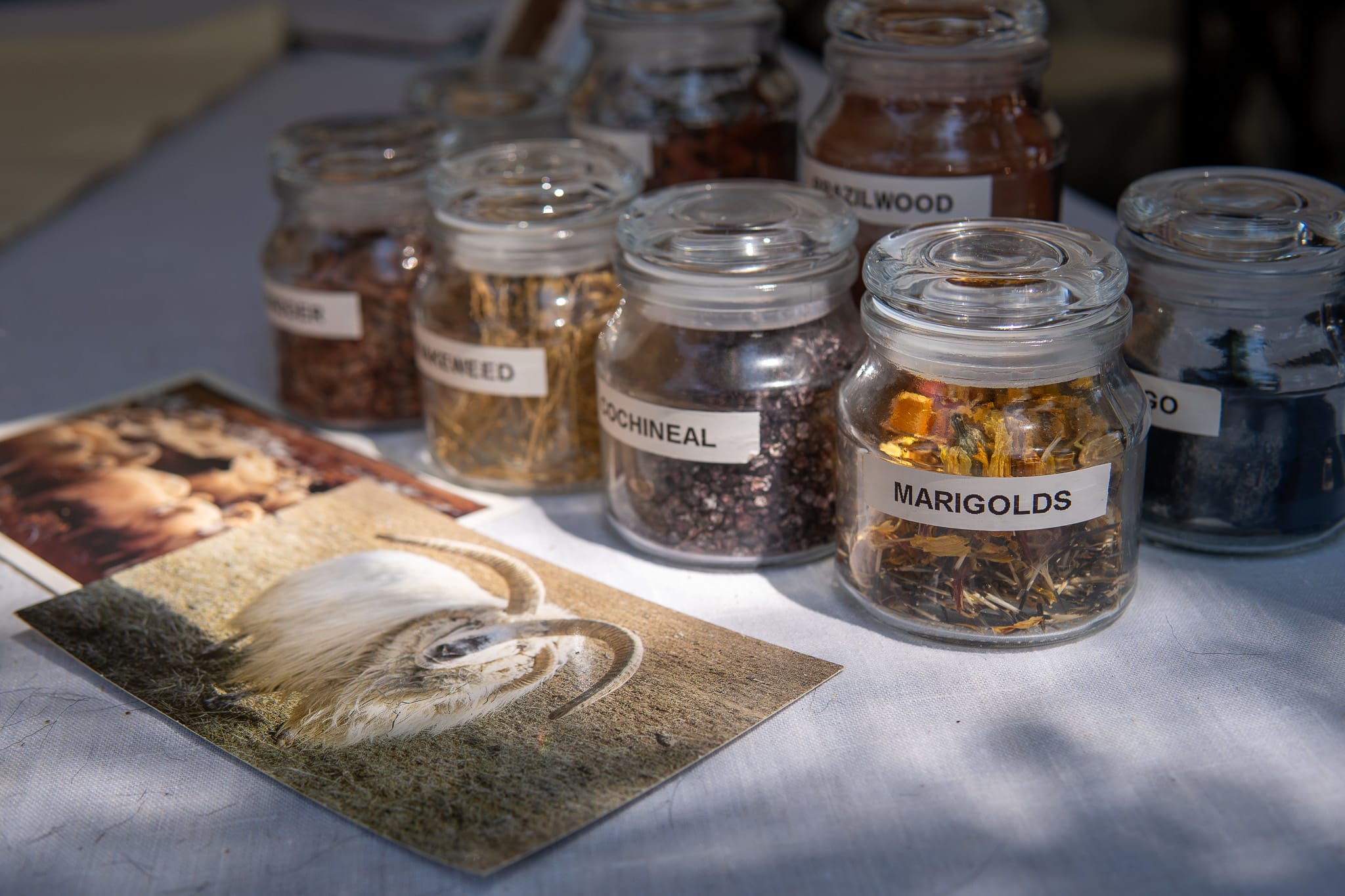
The raw materials and centuries of tradition that go into every piece at the Santa Fe Traditional Spanish Market.
🎨 What Is the Santa Fe Spanish Market?
The Traditional Spanish Market is the oldest and largest juried Spanish Colonial art market in the United States. It has been held every summer on the Santa Fe Plaza since 1926 — the same year it was founded — making 2026 its centennial celebration. That is not a minor milestone. A century of artists, families, and communities gathering on the same historic flagstones to share the same handmade traditions is something genuinely rare.
The market is presented by the Atrisco Heritage Foundation and organized to honor the artistic traditions brought to New Mexico by Spanish settlers in the 1500s. Those traditions — religious art forms, textile techniques, metalwork, woodcarving — were passed down through generations of New Mexico families in relative isolation, developing a distinctive regional character you won’t find anywhere else in the world.
This is not a craft fair. Every artist who exhibits must apply, be reviewed by a jury, and demonstrate mastery of historical techniques and materials. The work you see on the Plaza is authenticated, juried, and made by hand — often by artists whose families have been doing this for generations. When you buy something at Spanish Market, you’re not buying a souvenir. You’re acquiring a piece of a living tradition.
“The market is where our culture breathes. Each piece tells a story that connects us to our ancestors — and to the people who will come after us.”
In 2026, more than 160 juried adult artists and a cohort of mentored youth artists will take their places on the Plaza. Eighteen traditional art categories will be represented. And for the first time, all of it unfolds in the event’s 100th year — a centennial that makes this summer’s market unlike any that has come before.
📅 2026 Event Details at a Glance
✅ Official details: Visit traditionalspanishmarket.org for the most current artist lineup, schedule of demonstrations, and any updates to the 2026 event program. The centennial celebration may include additional programming beyond the standard market weekend — check for announcements as July approaches.
Want a sense of what Spanish Market feels like before you arrive? This video captures the atmosphere beautifully:
The Santa Fe Traditional Spanish Market — a century of handmade art on the historic Plaza.
✨ The Art — What You’ll See and Why It Matters
Walking into the Spanish Market for the first time can be overwhelming in the best way. Booth after booth of handcrafted work, each piece connected to a tradition that predates the United States by centuries. Here’s a primer on the major art categories — what they are, where they come from, and what to look for.
🖼 Retablos
Flat painted panels — usually on wood — depicting Catholic saints and religious scenes. Retablo painters work with natural pigments and follow centuries-old iconographic traditions. They are devotional objects first, artworks second, and the best examples are stunning.
🪵 Bultos
Three-dimensional carved wooden figures, typically saints or scenes from the life of Christ. A santero (maker of santos) carves, sands, and paints each figure by hand. Some of the most collectible work at Spanish Market falls in this category.
🔩 Tinwork
Ornate frames, crosses, lanterns, and mirrors hammered and punched from recycled tin. Tinwork became a distinctly New Mexican craft in the 19th century when tin cans arrived with trade routes — artisans repurposed them into elaborate decorative and devotional pieces.
🧵 Colcha Embroidery
Intricate wool-on-wool needlework with roots in Spanish Colonial textile traditions. The colcha stitch is a New Mexico original — a couching technique that produces remarkably detailed images of flowers, birds, religious scenes, and landscapes.
🌾 Straw Appliqué
One of the rarest surviving Spanish Colonial art forms. Flattened wheat or rye straw is arranged in geometric patterns on dark backgrounds — often crosses, frames, or boxes. Very few artists practice this technique today; finding it at Spanish Market is a genuine privilege.
🧶 Weaving
Rio Grande-style blankets and rugs with a design vocabulary centuries in the making. New Mexican weaving combines Spanish, Moorish, and Native American influences into textiles that are both functional and deeply beautiful. The patterns are specific to this region and this tradition.
The real differentiator at Spanish Market is this: the artist who made the piece is almost always sitting right there in the booth. You can ask about the materials, the technique, the family history behind it. That conversation — between a maker and someone who appreciates the work — is what the market has always been about.
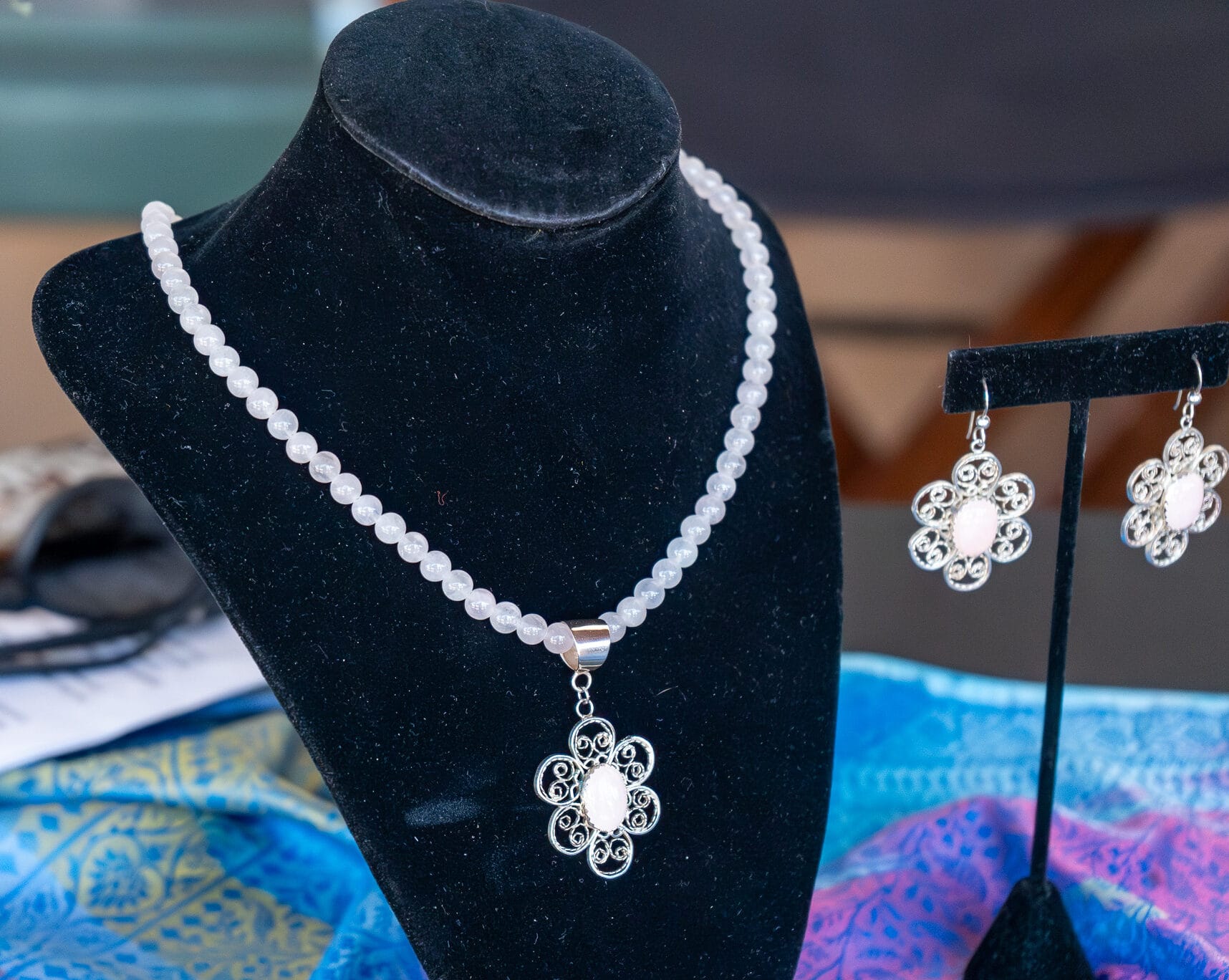
Handcrafted silver and turquoise jewelry — one of 18 traditional categories at the Spanish Market.
⏰ When to Arrive — A Crowd and Timing Guide
Spanish Market draws up to 70,000 visitors across the two-day weekend. Knowing when to show up changes your experience significantly. Here’s how to read the rhythm of the event.
Early Saturday (8:30–9:00 AM)
The best time for serious collectors. The most coveted pieces in high-demand categories — especially award-winning bultos and tinwork — move in the first hour. Arrive before the gates open if you have specific artists in mind.
Saturday Mid-Morning (9:00–11:00 AM)
Peak energy. Artists are fresh and talkative, the full market is set up, and the Plaza is alive. This is the best time for first-time visitors who want to take it all in. Crowds build steadily through mid-morning — bring water and sunscreen. Santa Fe sits at 7,000 feet, and July sun is intense.
Saturday Afternoon (1:00–4:00 PM)
The hottest and most crowded stretch. A good time for a long lunch at one of the Plaza restaurants, a walk to the Cathedral Basilica, or a rest back at your rental before returning for the late afternoon.
Sunday Morning (9:00–11:00 AM)
The hidden gem of the weekend. Sunday crowds are noticeably smaller, the atmosphere is more relaxed, and artists have more time for conversation. Ideal for visitors who want a deeper, unhurried experience rather than a browse-and-buy approach.
🧴 What to bring: Sunscreen SPF 30+, a wide-brim hat, a refillable water bottle, and comfortable walking shoes. The Plaza and surrounding streets are historic flagstone — uneven in places. July highs reach 85°F but evenings cool into the 50s–60s°F, so a light layer for after-dinner strolls is worth packing.
🅿️ Parking and Getting to the Plaza
Downtown Santa Fe parking fills fast on Spanish Market weekend. This is not an exaggeration — by mid-morning Saturday, the closest lots are full. Here are your realistic options:
| Option | Details | Best For |
|---|---|---|
| Sandoval Street Garage | 227 Sandoval St — short walk to the Plaza | Early arrivals; first-come, fills fast |
| Convention Center Garage | 201 W Marcy St — ~15-min walk to Plaza | Reliable backup when Sandoval fills |
| Street Parking | Available but competitive — arrive before 8:00 AM | Only if you arrive very early |
| Ride-Share | Uber and Lyft operate in Santa Fe; request drop-off several blocks from the Plaza | Practical from properties further from downtown |
| Walk from Fort Marcy | ~10 minutes downhill to the Plaza | The easiest option — no parking stress at all |
🔍 Local tip: Guests staying at Fort Marcy Condos walk to the Spanish Market. The Cross of the Martyrs is right next door, and the Plaza is a pleasant 10-minute stroll downhill through the historic district. No garage fees, no shuttle timing, no parking anxiety on the busiest weekend of the summer.
🗺️ Spanish Market vs. Indian Market vs. Folk Art Market
Santa Fe hosts three major art markets each summer, and first-time visitors often confuse them. They’re genuinely different events — different art traditions, different organizers, different atmospheres. Here’s a clear breakdown:
| Market | Art Focus | 2026 Dates | Admission | Location |
|---|---|---|---|---|
| Traditional Spanish Market | Spanish Colonial art — retablos, bultos, tinwork, weaving, colcha embroidery | July 25–26, 2026 | Free | Santa Fe Plaza |
| Contemporary Hispanic Market | Modern Hispanic art — paintings, sculpture, mixed media | July 25–26, 2026 | Free | Lincoln Ave (across from Plaza) |
| Santa Fe Indian Market | Native American art — pottery, jewelry, textiles, painting, sculpture | August 2026 | Free | Santa Fe Plaza |
| International Folk Art Market | Folk art from 50+ countries worldwide | July 2026 | Ticketed | Milner Plaza (Museum Hill) |
Worth noting: the Contemporary Hispanic Market runs simultaneously with the Traditional Spanish Market on Lincoln Avenue, just across from the Plaza. Many visitors move between the two over the weekend — the traditional and the contemporary side by side creates a remarkable picture of how Spanish Colonial heritage has evolved and continues to evolve in New Mexico.
If you’re planning an extended Santa Fe art summer, all four markets are worth attending. Planning around Indian Market weekend as well? Our Santa Fe Indian Market guide has everything you need for that event too.
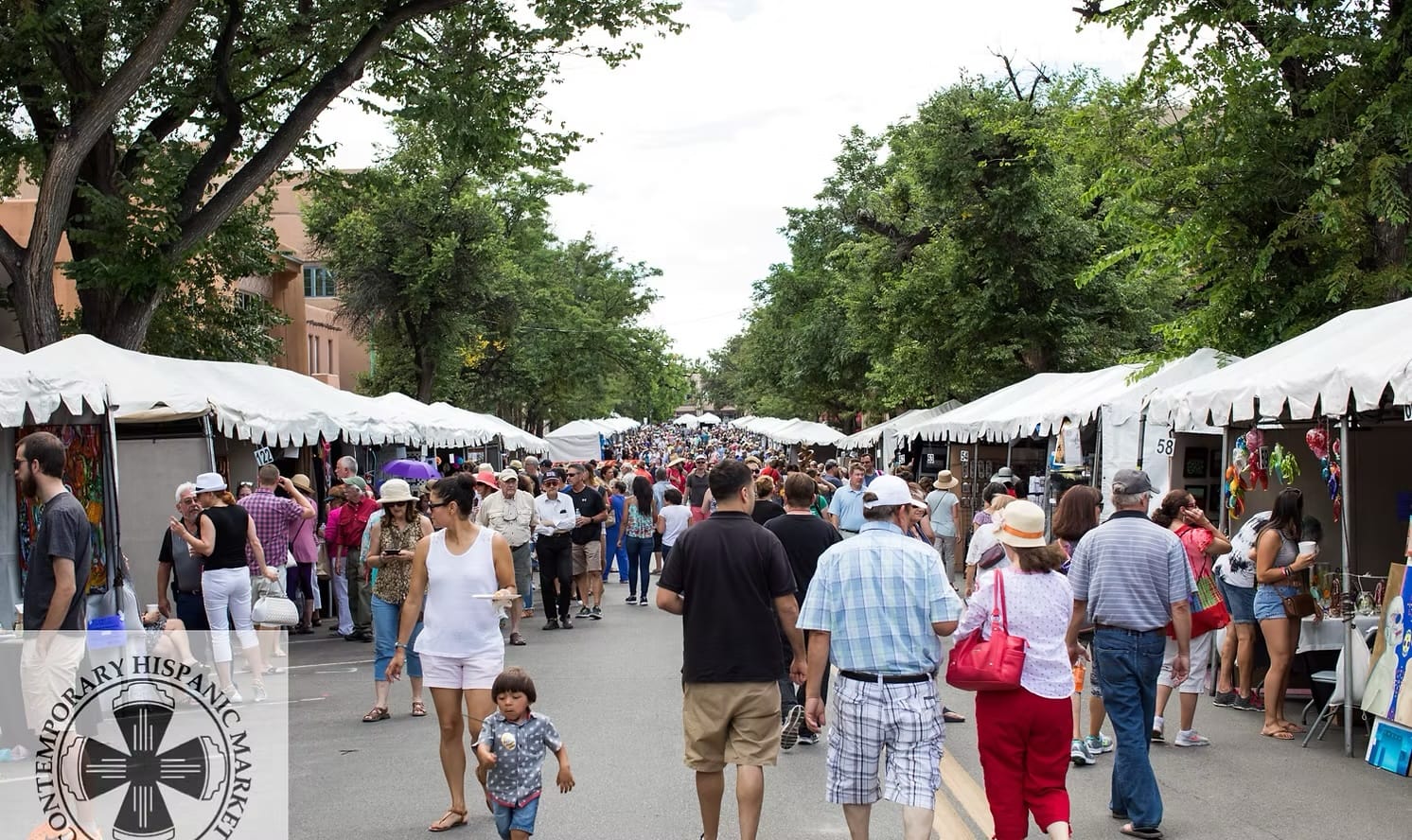
The Contemporary Hispanic Market on Lincoln Avenue runs simultaneously — two markets, one remarkable weekend.
💰 Budget Guide — What to Bring and What to Expect
Admission is free — every dollar you spend goes toward the art and food. Here’s a realistic picture of what to expect across different budgets.
🎒 Casual Visitor ($50–$200)
Small tinwork pieces, prints, jewelry, colcha bookmarks, and decorative items. Food vendors on the Plaza are excellent — budget $15–$25 for lunch from regional food stalls. A $50–$200 budget gives you a genuine piece of Spanish Colonial art to take home.
🖼 Art Collector ($500–$2,000)
Original retablos, mid-size bultos, quality tinwork frames, and hand-woven textiles fall in this range. Plan your visit: research artists in advance on the official website and know who you want to see before the market opens on Saturday morning.
Investment-level work from award-winning santeros and master weavers can reach $2,000–$5,000 and beyond — these pieces regularly end up in museum collections. If you’re a serious collector, arrive early Saturday and go directly to the artists you’ve identified.
- 💳 Payment: Most artists now accept credit cards, but bring cash for smaller purchases and food vendors. ATMs are available near the Plaza.
- 🚫 Negotiating: This is not the culture at Spanish Market. These are juried, gallery-quality pieces priced by master artists. Appreciate the work, ask about the process — and pay the asking price.
- 📦 Shipping: Many artists can arrange packing and shipping for larger pieces. Ask at the booth.
- 📸 Photography: Always ask before photographing an artist or their work. Most are happy to oblige.
🌵 Make a Weekend of It — Beyond the Market
Spanish Market weekend falls in what many locals consider Santa Fe’s finest stretch of summer. The rains haven’t started yet, the light is extraordinary, and the city is fully alive. Here’s how to fill the hours between market sessions.
⛪ Cathedral Basilica of St. Francis
A 5-minute walk from the Plaza. The Cathedral’s Romanesque architecture and collection of sacred art connect directly to the Spanish Colonial tradition you’ll see at the market. The oldest Madonna statue in North America lives here.
🎨 Canyon Road Galleries
A half-mile stretch of more than 80 galleries, 10 minutes from the Plaza. Canyon Road is the heartbeat of Santa Fe’s art scene. Walking it on a Spanish Market weekend — after spending the morning with traditional art — creates a remarkable before-and-after perspective.
🏛️ Museum Hill
Four world-class museums within walking distance of each other: the Museum of International Folk Art, the Museum of Indian Arts and Culture, the Museum of Spanish Colonial Art, and the Wheelwright Museum. The Museum of Spanish Colonial Art is a natural extension of the market itself.
🎵 Santa Fe Opera
The summer opera season runs through August, and an evening performance under the stars at the open-air opera house is one of the great experiences in American culture. Book tickets well in advance for Spanish Market weekend performances.
The restaurants and cafes surrounding the Plaza are excellent — and fully booked by Spanish Market weekend. Make dinner reservations as soon as your travel dates are confirmed. The Plaza dining scene, from New Mexican red chile to upscale contemporary cuisine, is one of the reasons visitors return year after year.
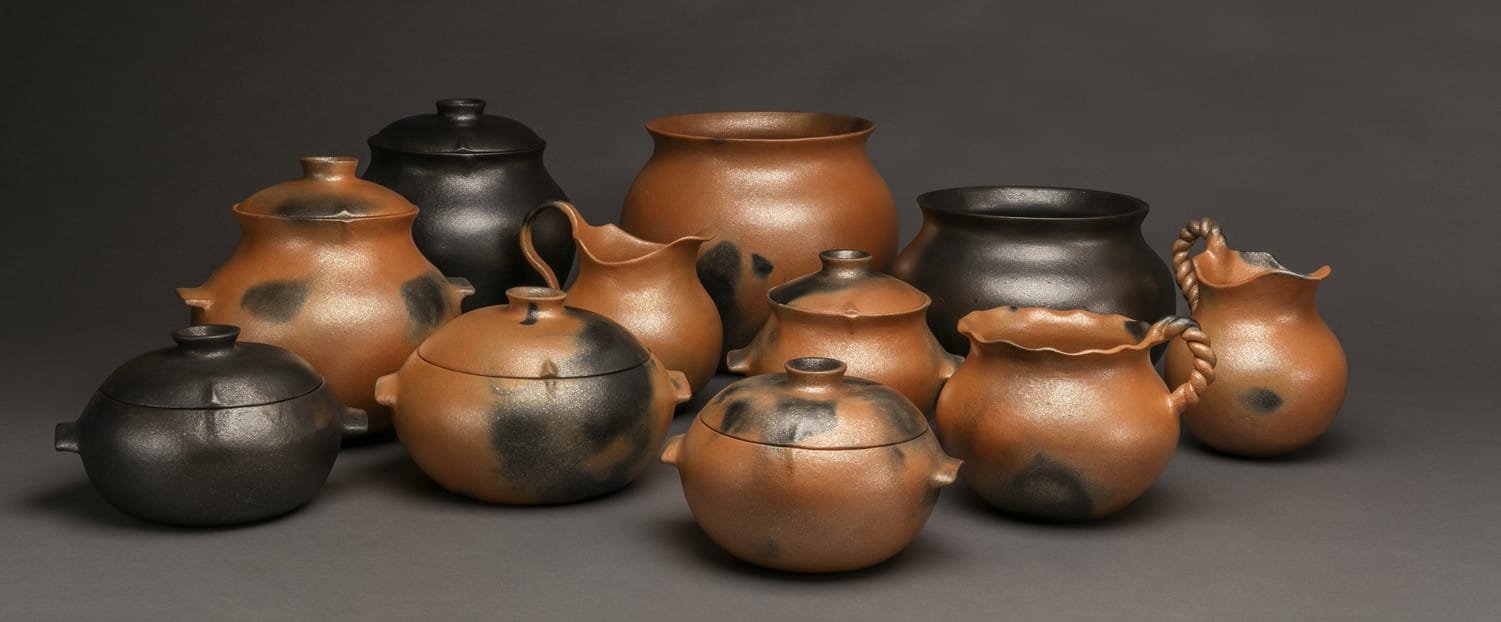
Artisan pottery — one of the most collected categories at the Traditional Spanish Market.
🏡 Where to Stay for Santa Fe Spanish Market 2026
July 25–26 is one of the busiest weekends of the Santa Fe summer. The best vacation rentals and downtown properties move fast — often weeks before the event. If you’re planning to attend the centennial Spanish Market, book early. The difference between a property steps from the Plaza and one that requires a car changes your entire experience.
🏨 Fort Marcy Condos — Walk to the Plaza
Set on nine landscaped acres just above historic downtown Santa Fe, Fort Marcy is the ideal home base for Spanish Market weekend. The Plaza and its surrounding market booths are a 10-minute walk from your door — no parking fees, no shuttle timing, no missing the opening bell because you couldn’t find a spot.
- ~10-minute walk to the Historic Santa Fe Plaza
- 1-, 2-, and 3-bedroom condos with full kitchens
- Private balconies with panoramic Santa Fe views
- Next to Cross of the Martyrs — a stunning city overlook
- Perfect for couples, families, and multi-night stays
🏡 Quail Run — Resort Amenities and Space
For groups, families, or anyone who wants to come home to resort-quality space after a full day on the Plaza, Quail Run delivers. A peaceful, gated community a short drive from downtown, with the kind of living space no hotel room can match.
- Homes, townhomes, and condos — multiple sizes available
- Resort amenities including pool and tennis courts
- Gated community with tranquil high-desert setting
- Short drive to the Plaza and all Spanish Market events
- Ideal for larger groups and extended Santa Fe stays
Book with Confidence
We understand that your Santa Fe vacation is more than a getaway — it’s an investment in an experience worth protecting. Every booking through All Seasons Resort Lodging comes with our full guest programs:
- 🔒 Lowest Rate Guarantee — we match any lower price you find
- ↩️ 48-Hour Money-Back Guarantee — risk-free booking window
- 🛡️ Travel Protection Plan — trip insurance and coverage details
- 💙 True Blue Perks — 10% discount for returning guests
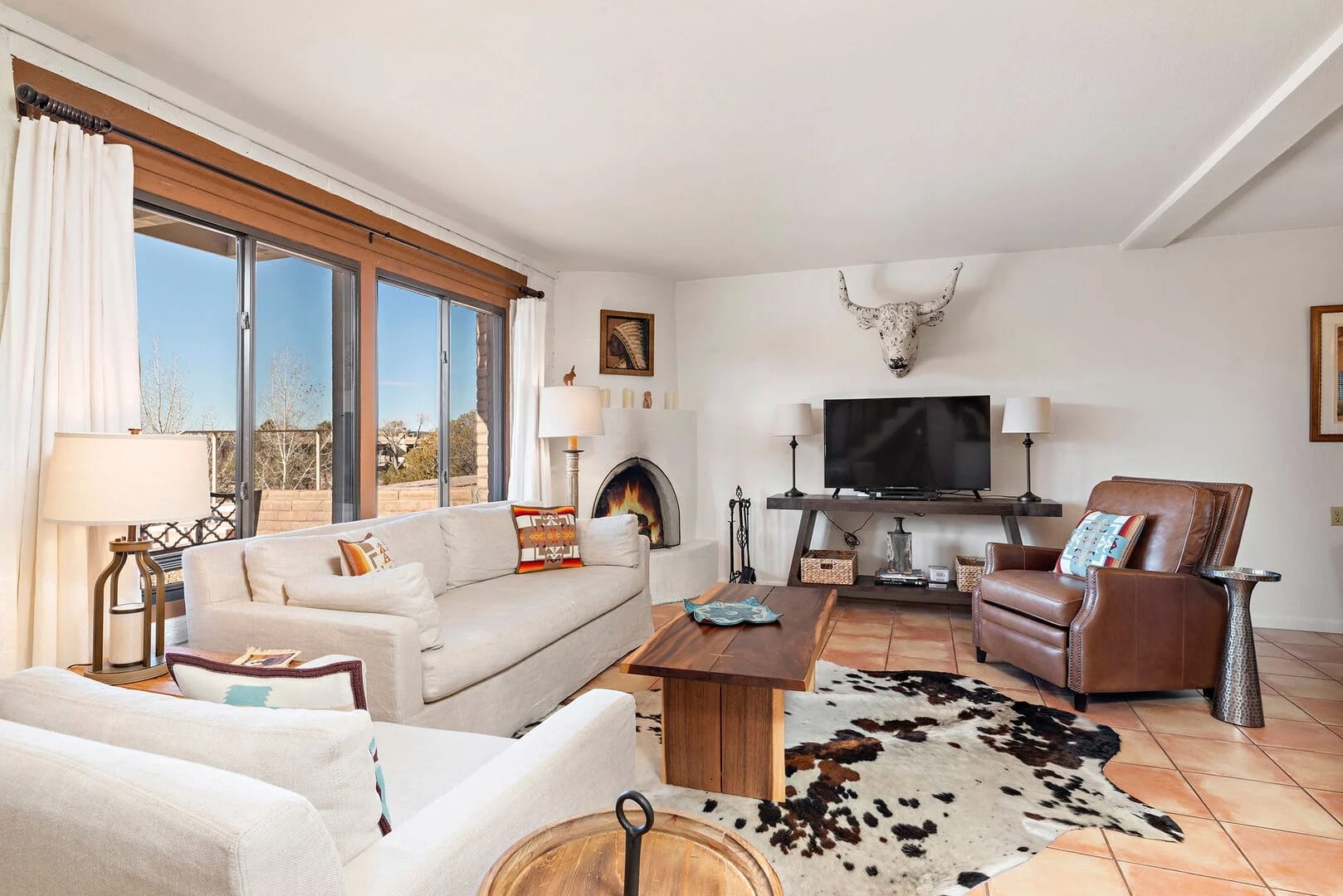
Fort Marcy Condos — a 10-minute walk from the Spanish Market and everything downtown Santa Fe has to offer.
❓ Frequently Asked Questions — Santa Fe Spanish Market 2026
When is the Santa Fe Spanish Market in 2026?
The Traditional Spanish Market takes place on Saturday, July 25 and Sunday, July 26, 2026, from 9:00 AM to 5:00 PM both days. The event is held on the Historic Santa Fe Plaza and surrounding streets in downtown Santa Fe.
Is the Santa Fe Spanish Market free to attend?
Yes — admission to the Traditional Spanish Market is entirely free. The Contemporary Hispanic Market, which runs simultaneously on Lincoln Avenue, is also free. Your budget goes toward art purchases and food from the on-site vendors.
What kind of art is at the Spanish Market?
The market features 18 traditional Spanish Colonial art categories including retablos (painted devotional panels), bultos (carved wooden saints), tinwork, colcha embroidery, straw appliqué, weaving, furniture, and jewelry. Every artist is juried and must demonstrate mastery of historical techniques.
How is Spanish Market different from the Santa Fe Indian Market?
They are entirely separate events celebrating different cultural traditions. The Traditional Spanish Market honors Spanish Colonial art forms brought by Spanish settlers in the 1500s. The Santa Fe Indian Market, held in August, showcases Native American art — pottery, jewelry, textiles, and painting. Both are held on the Santa Fe Plaza and both are free.
Where should I park for the Santa Fe Spanish Market?
The Sandoval Street Garage (227 Sandoval St) and the Convention Center Garage (201 W Marcy St) are the best bets — arrive early, as both fill by mid-morning Saturday. Ride-share is a practical alternative. Guests staying at Fort Marcy Condos walk to the market in about 10 minutes and skip the parking challenge entirely.
Where is the best place to stay for Spanish Market weekend?
Fort Marcy Condos are the most walkable option — about 10 minutes from the Historic Plaza. Quail Run offers resort amenities and space for larger groups, a short drive from downtown. Both are managed by All Seasons Resort Lodging and available to book direct with our Lowest Rate Guarantee.
Ready to Experience the 100th Santa Fe Spanish Market?
A century of Spanish Colonial art, alive on the historic Plaza. July 25–26, 2026 is a weekend worth planning around — and Fort Marcy Condos put you steps from all of it. Our local team is here to help you make the most of every moment in Santa Fe.
Questions? Call us 7 days a week: 888-575-2775 • 9 AM – 5 PM Mountain Time • reservations@asrlodging.com
![Your Guide To Park City Mountain Lift Tickets [2026-2027]](https://www.allseasonsresortlodging.com/wp-content/uploads/2026/09/park-city-canyons-spring-skiing-2025-90.jpg "Your Guide To Park City Mountain Lift Tickets [2026-2027]")